
Engine pistons work under heat, pressure, friction, and repeated impact. A small material or dimensional mistake can quickly become a major engine problem.
A custom engine piston must balance performance, durability, weight, geometry, and manufacturing requirements. The best design is not based on one specification alone. Material selection, manufacturing method, dimensional accuracy, and quality control must all match the engine's operating conditions.
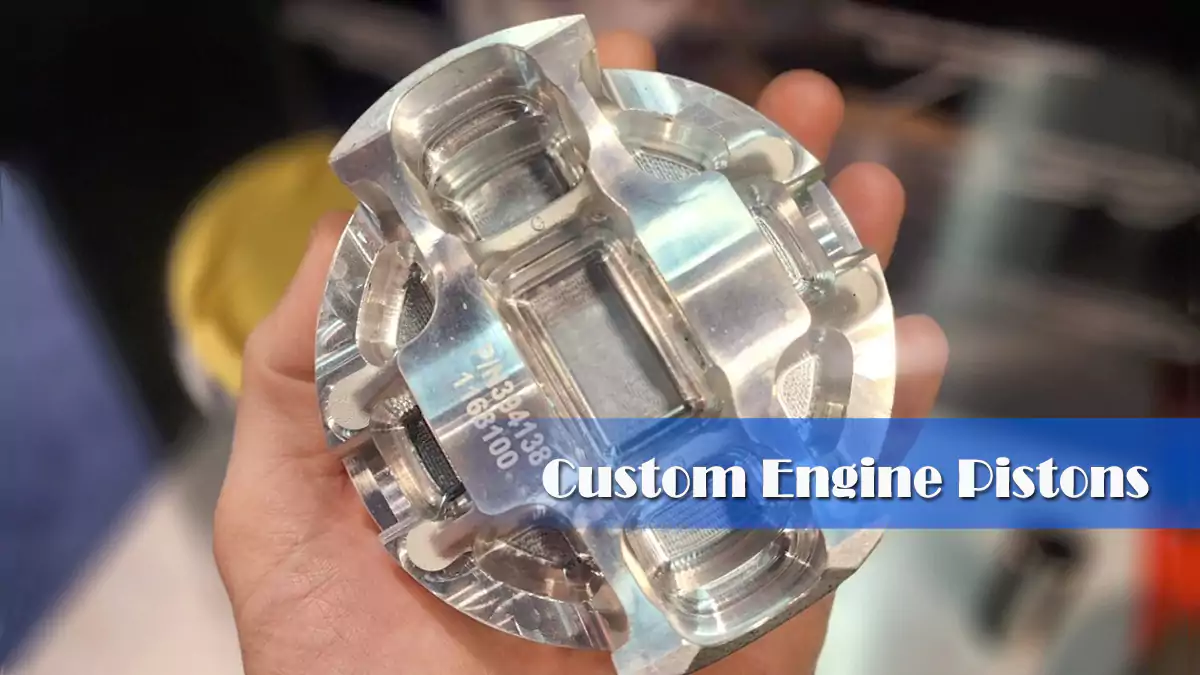
Piston design cannot be separated from manufacturing. The material affects strength and weight. The manufacturing process affects internal integrity and geometry. The inspection process determines whether the finished piston is ready for real engine service.
What Materials and Parts Make Up an Engine Piston?
The piston material and structure directly affect engine performance, durability, and service life. I normally consider both factors together when developing a custom piston.
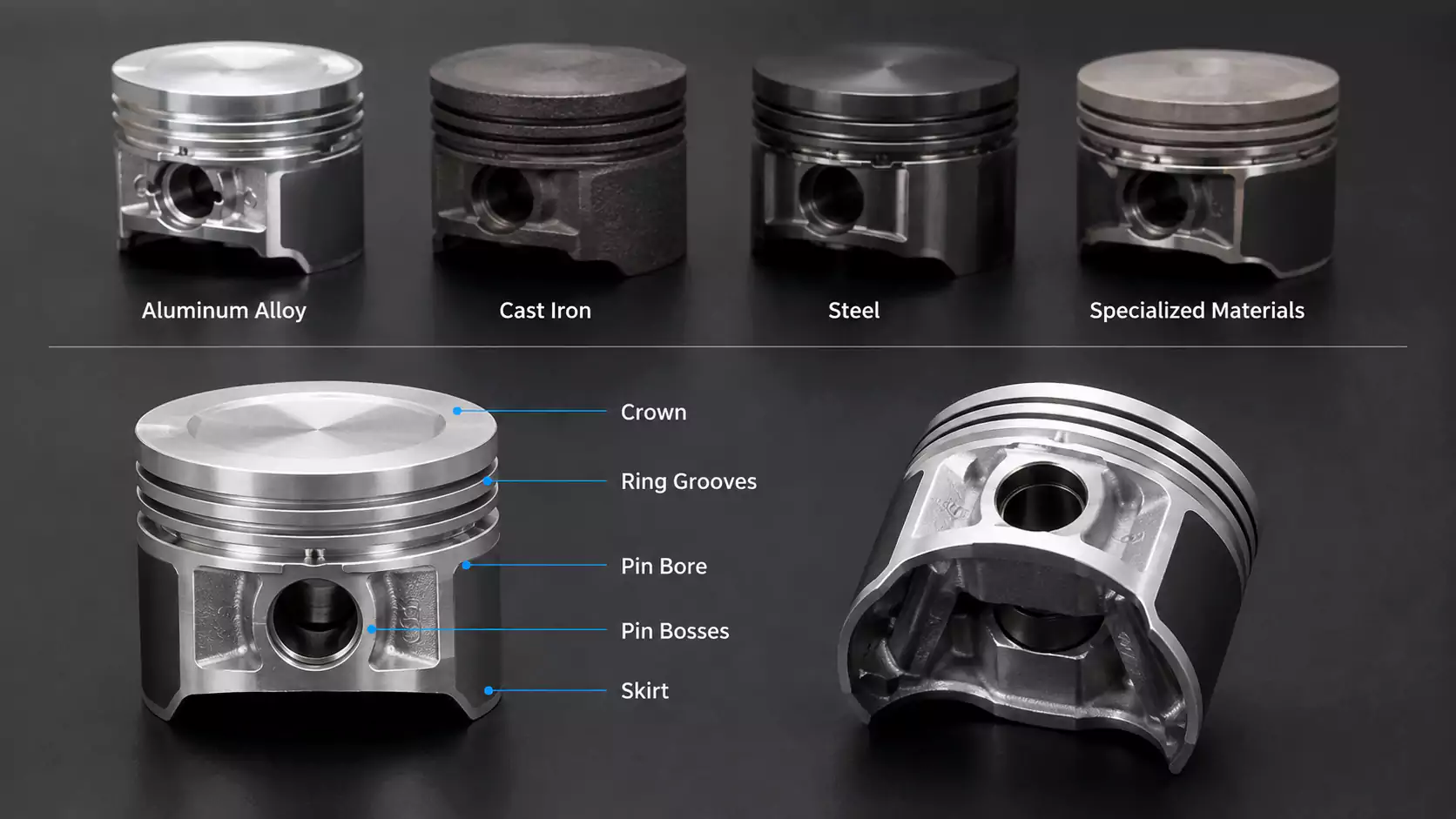
Engine pistons can use aluminum alloys, cast iron, steel, and other specialized materials depending on load, temperature, speed, and application. The main piston components include the crown, ring grooves, skirt, pin bosses, and pin bore, which work together to handle combustion pressure and guide piston movement.
What Materials Are Commonly Used for Engine Pistons?
Aluminum alloys are the most common choice for many modern engine pistons because they offer low density, good thermal conductivity, and relatively low reciprocating mass. Different aluminum alloys can be selected based on strength, temperature, and performance requirements.
Other materials are also used when the operating conditions require different properties.
| Material | Typical Advantages | Common Applications |
|---|---|---|
| Aluminum alloys | Lightweight, good thermal conductivity | Gasoline engines, performance engines, automotive engines |
| Cast iron | High wear resistance and good durability | Heavy-duty and older engine designs |
| Steel | High strength and fatigue resistance | Heavy-duty diesel and high-load applications |
| Aluminum-silicon alloys | Good wear resistance and dimensional stability | Automotive and high-performance pistons |
| Specialized alloys | Improved strength or high-temperature performance | Racing and demanding engine applications |
Material selection depends on more than strength alone. Engine speed, combustion temperature, cylinder pressure, thermal expansion, piston weight, and expected service life all need to be considered.
The manufacturing process also affects the final material structure. Forging can provide controlled grain flow for demanding load conditions.1 Precision investment casting can produce complex near-net-shape geometry before CNC machining.
What Are the Main Parts of an Engine Piston?
A piston contains several functional areas, and each one has a specific job.
- Piston Crown: The top surface receives combustion pressure and high temperature. Its shape also affects the combustion chamber and compression characteristics.
- Ring Grooves: These grooves hold the piston rings. Their dimensions and positions are important for gas sealing and oil control.
- Piston Skirt: The skirt guides the piston inside the cylinder and helps control lateral movement. Its profile and running clearance are critical.
- Pin Bosses: These reinforced sections support the wrist pin and transfer combustion forces from the piston to the connecting rod.
- Pin Bore: The pin bore houses the wrist pin. Its diameter, alignment, and position must be precisely controlled.
- Oil-Control Features: Depending on the design, the piston may include oil drain holes or other features that help manage lubrication around the ring area.
These features need to work as one system. A change to the crown can affect weight and thermal behavior. A change to the skirt can affect clearance. A change to the pin boss can affect strength and mass.
For custom work, the complete piston geometry should therefore be reviewed before selecting the final manufacturing route.
How Are Custom Engine Pistons Manufactured?
A custom piston needs more than a good drawing. The manufacturing route must reproduce the required geometry, material condition, and dimensional stability from one part to the next.
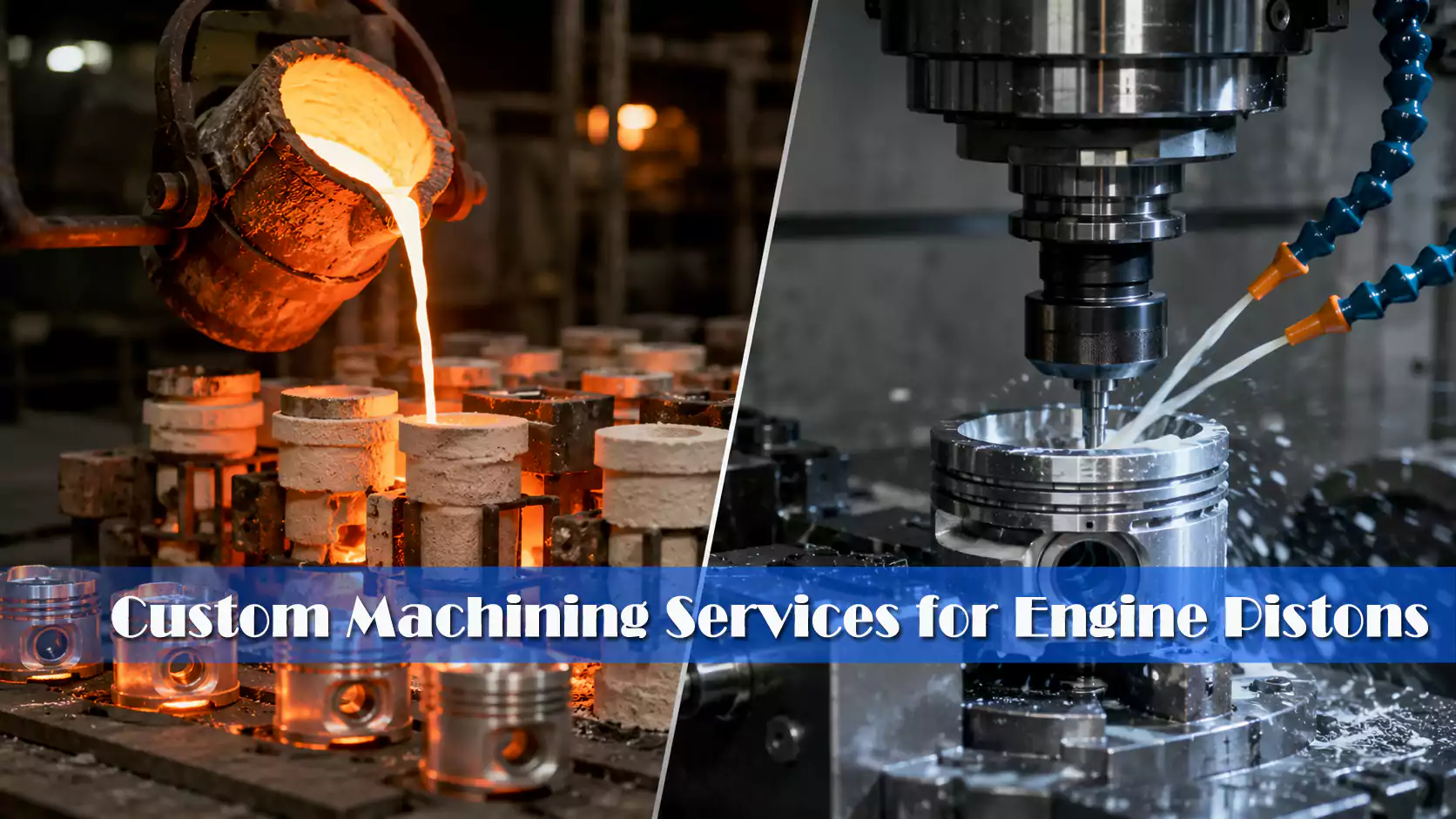
Custom engine pistons can be manufactured by combining precision investment casting with CNC machining. Investment casting forms complex near-net-shape geometry with controlled detail, while CNC machining finishes critical features such as the pin bore, ring grooves, skirt profile, crown features, and other precision surfaces.
Why Do I Use Precision Investment Casting for Custom Engine Pistons?
For complex piston designs, the casting process is often the first manufacturing stage to consider. Precision investment casting can reproduce detailed external features and complex shapes with relatively small machining allowances.2
This approach can reduce unnecessary material removal during CNC machining. It also provides flexibility when a custom piston contains ribs, bosses, curved surfaces, or other features that would be difficult to produce entirely from solid material.
The casting stage still requires strict process control. Wax pattern quality, ceramic shell condition, alloy preparation, pouring temperature, filling behavior, and solidification all affect the final casting.
A casting should not be considered finished simply because it comes out of the mold. Dimensional variation, surface defects, and other casting conditions need to be checked before the part enters precision machining. This helps prevent casting problems from being carried into later manufacturing stages.
How Does CNC Machining Improve Custom Piston Accuracy?
Investment casting establishes the main piston shape, while CNC machining creates the final functional geometry.
Critical features can include the pin bore, ring grooves, skirt diameter, skirt profile, crown features, and other mating surfaces.3 These areas require controlled machining because their dimensional relationships directly affect piston performance.
The machining sequence matters as well. Reliable datum surfaces should be established first, followed by the critical features. A controlled sequence helps reduce positioning errors and keeps the relationship between different features consistent.
For a custom piston, one tolerance should never be considered in isolation. A pin bore can meet its diameter tolerance and still cause a problem if its position is incorrect relative to the piston centerline.
| Manufacturing Stage | Main Control Point |
|---|---|
| Wax pattern | Geometry and dimensional consistency |
| Ceramic shell | Shell integrity and surface quality |
| Alloy preparation | Material condition and cleanliness |
| Precision investment casting | Filling and solidification |
| Heat treatment | Material properties and dimensional stability |
| Rough CNC machining | Datum and material removal |
| Precision CNC machining | Critical dimensions and profiles |
| Final inspection | Dimensions, surface condition, and traceability |
This combination of casting and machining is especially useful for custom engine and powertrain parts where complex geometry and controlled final dimensions are both important.
Custom Piston Case Study: Combining Investment Casting and CNC Machining
One representative custom piston project involved an aluminum piston for a high-load performance engine. The customer wanted complex crown geometry and controlled reciprocating mass while maintaining reliable dimensional accuracy.
The design used a near-net-shape precision investment casting followed by CNC machining. This approach formed the main piston geometry during casting and reserved precision machining for the functional areas.
| Parameter | Target Specification |
|---|---|
| Application bore | 100 mm |
| Piston material | Aluminum alloy |
| Nominal piston diameter | 99.94 mm |
| Pin diameter | 22 mm |
| Compression ring grooves | 2 |
| Oil-control ring groove | 1 |
| Pin bore tolerance | ±0.005 mm |
| Ring groove width tolerance | ±0.01 mm |
| Crown machining allowance | 0.50 mm |
| Final dimensional inspection | 100% |
Casting quality was controlled before machining because CNC machining cannot correct every casting problem. The casting needed stable geometry and suitable machining allowance before entering the CNC process.
The next stage established machining datums and finished the pin bore, ring grooves, skirt profile, and other critical features. Particular attention was given to the relationship between the pin bore and piston centerline.
After machining, the critical dimensions were checked again. Surface condition and feature position were also reviewed instead of relying only on individual diameter measurements.
That process reflects an important lesson from the shop floor: a CNC machine may be capable of producing one accurate part, but the complete casting and machining process must be capable of producing accurate parts consistently.
Piston vs. Cylinder Liner: What Is the Difference?
Pistons and cylinder liners are often discussed together because they work as a pair. They are not interchangeable components, and their design requirements are very different.
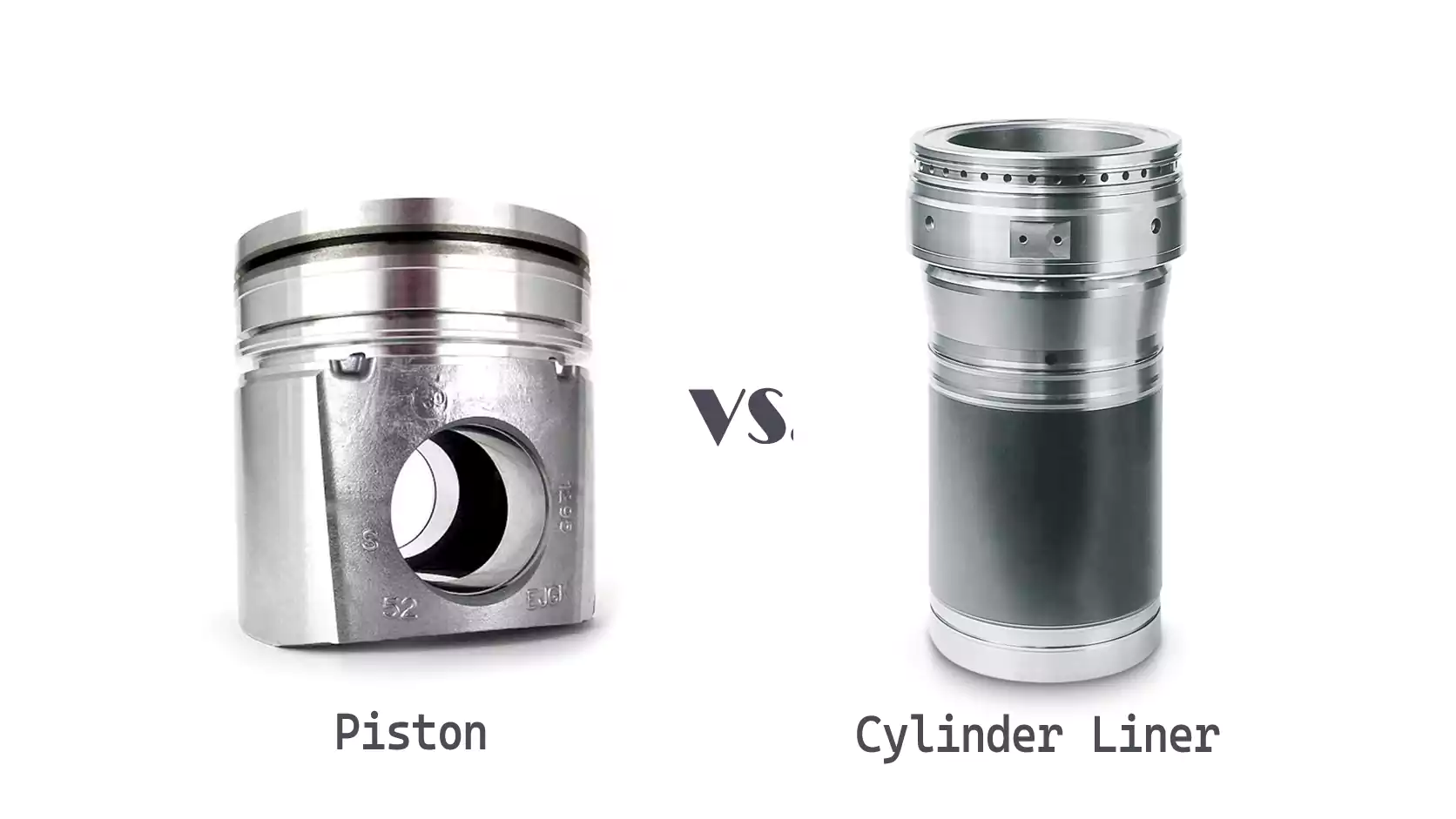
The piston is the moving component that transfers combustion force through the connecting rod, while the cylinder liner is the stationary surface that guides the piston and contains the combustion environment. The piston focuses on strength, weight, heat transfer, and motion; the liner focuses on wear resistance, sealing, cooling, and dimensional stability.
Why Do I Treat the Piston and Liner as a System?
The piston cannot be finalized by looking only at its own drawing. The cylinder liner creates the running surface, so its bore condition directly affects piston behavior.
The piston skirt needs the correct running clearance. That clearance must account for thermal expansion because the piston and liner operate at different temperatures. If the clearance is too small, the piston can scuff or seize. If it is too large, the engine can experience excessive noise, blow-by, or oil consumption.
Surface finish matters as well. The piston skirt and liner need compatible surface conditions. The ring grooves and cylinder surface must also work together to maintain proper sealing.
| Component | Main Function | Key Quality Concern |
|---|---|---|
| Piston crown | Receives combustion load | Strength and thermal resistance |
| Piston skirt | Guides piston movement | Profile and running clearance |
| Ring grooves | Hold piston rings | Groove width and position |
| Pin bore | Transfers connecting-rod load | Diameter and alignment |
| Cylinder liner | Guides and contains piston | Bore size and roundness |
| Liner surface | Supports sliding contact | Surface finish and wear |
This is why mating components should be reviewed together when developing a new engine or modifying an existing design. The piston is one part of a larger engine powertrain system, so its dimensions and operating conditions need to match the surrounding components.
How Do You Choose a Custom Engine Piston Manufacturer?
The lowest quotation is not enough to select a piston manufacturer. A supplier needs to understand the complete route from material preparation and precision casting to CNC machining, inspection, and final delivery.
The right custom engine piston manufacturer should have proven precision investment casting and CNC machining capabilities, strong material and process control, suitable inspection equipment, and experience with similar engine applications. Quality should be controlled at every stage through documented processes, dimensional inspection, material traceability, and final verification.
What Should I Check Before Selecting a Custom Piston Supplier?
Manufacturing capability comes first. If the piston requires precision investment casting, the supplier should be able to explain how it controls the casting process from wax patterns and ceramic shells to alloy preparation and final casting inspection.
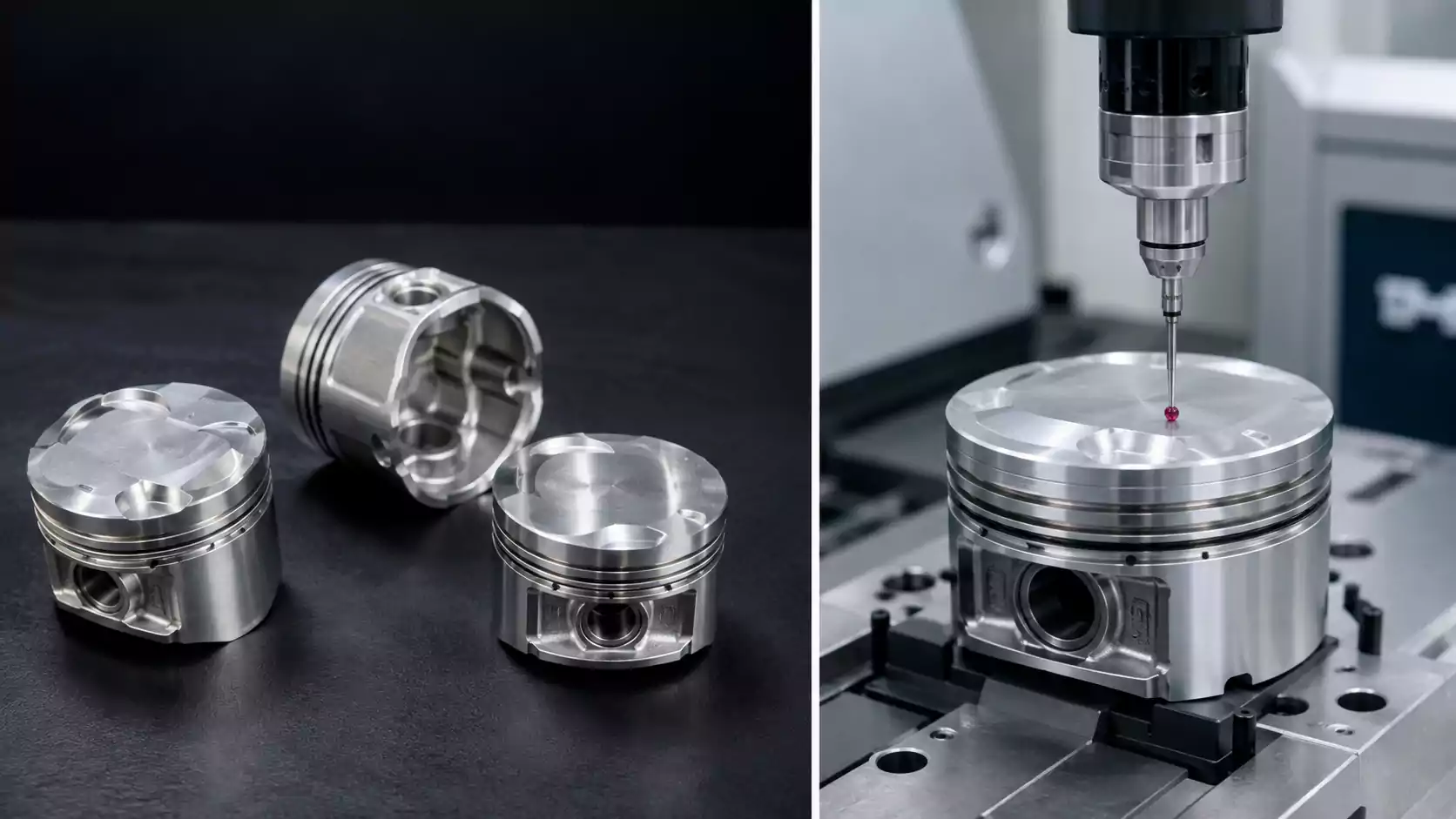
CNC machining capability is equally important. The supplier should have suitable equipment, reliable workholding, controlled machining datums, and inspection methods for critical piston features.
Engineering communication also tells me a lot about a supplier. When a difficult tolerance is discussed, a strong manufacturer should explain how that tolerance will be controlled during production. When a feature could be modified for better manufacturability, the supplier should be able to provide practical engineering feedback.
| Supplier Evaluation Area | What I Look For |
|---|---|
| Investment casting | Stable wax patterns, shell quality, alloy control, casting inspection |
| CNC machining | Suitable equipment and controlled machining sequence |
| Material control | Material certification and batch traceability |
| Heat treatment | Controlled process and documented results |
| Dimensional inspection | CMM, gauges, micrometers, and profile measurement |
| Surface inspection | Roughness and visible defect control |
| Quality documentation | Inspection reports and traceability |
| Engineering support | Practical DFM and process feedback |
| Production consistency | Repeatable results across batches |
Previous production experience is also worth checking. A supplier can list many machines on a website, but that does not prove the ability to manufacture a demanding piston consistently.
How Do I Ensure Custom Engine Piston Quality?
Quality control should begin before the first piston is produced. The material is the first control point, so the alloy and material documentation should be verified before production starts.
The next stage is precision investment casting. Casting quality must be checked before machining because a dimensional or structural casting problem may become harder to identify after material has been removed.
Heat treatment needs the same level of attention. The material condition can affect both mechanical performance and dimensional stability. For critical projects, heat-treatment records should therefore remain part of the quality documentation.
CNC machining then controls the final functional geometry. Defined datums and controlled machining sequences help maintain the required relationship between the pin bore, ring grooves, skirt profile, crown geometry, and other critical features.
Inspection should cover more than individual dimensions. Feature position, alignment, surface condition, and the relationship between mating features can all affect piston performance.
| Quality Stage | Key Checks |
|---|---|
| Material verification | Alloy grade and certification |
| Casting inspection | Geometry, surface condition, and casting integrity |
| Heat treatment | Process parameters and material condition |
| CNC machining | Critical dimensions and feature position |
| Surface inspection | Roughness and visible defects |
| Final inspection | Drawing requirements and functional dimensions |
| Traceability | Material, process, and inspection records |
A final inspection report can confirm that a part passed. A controlled manufacturing process provides confidence that the next batch will pass as well.
For production programs, traceability is especially important. Material batches, casting records, heat-treatment records, machining stages, and inspection results should be connected through the production record. This makes it easier to identify the source of a problem if one appears later.
Nonconformance management also matters. A strong supplier should identify the root cause, define corrective action, and verify the result. Quality control is not only about rejecting bad parts. It is about reducing the chance of producing the same bad part again.
The final supplier decision should therefore be based on the complete manufacturing system. The strongest partner is not simply the one that can make a piston once. It is the one that can control precision investment casting, CNC machining, inspection, documentation, and communication as one repeatable process.
Conclusion
A reliable custom engine piston starts with the right material and geometry, then depends on precision investment casting, accurate CNC machining, and disciplined quality control to deliver consistent performance. The right manufacturing partner should be able to control every critical stage from material selection and casting to machining and final inspection.
-
"Forging - Wikipedia", https://en.wikipedia.org/wiki/Forging. Metallurgy references on forging describe how plastic deformation during forging can align or refine grains (i.e., produce directionally oriented microstructures), which can improve strength and fatigue resistance under certain loading conditions; however, the benefit depends on alloy, forging ratios, heat treatment, and the specific stress state. Evidence role: mechanism; source type: encyclopedia. Supports: Forging can provide controlled grain flow for demanding load conditions.. Scope note: General support for the grain-flow/microstructure mechanism; direct proof for “demanding load conditions” is contextual to the alloy/process and load type. ↩
-
"Types of Casting Process and Excepted Tolerances", https://uark.pressbooks.pub/mechanicaldesign/chapter/types-of-casting-process-and-excepted-tolerances/. Investment casting literature describes the ability of the lost-wax/lost-pattern process to form intricate near-net-shape components, which commonly reduces—but does not eliminate—machining allowance for final dimensions. Evidence role: general_support; source type: encyclopedia. Supports: Precision investment casting can reproduce detailed external features and complex shapes with relatively small machining allowances.. Scope note: Support is contextual (typical manufacturing practice); the article’s “relatively small” allowance is not quantified and may vary by alloy, feature size, and required tolerances. ↩
-
"Modeling for Design Optimization of Piston Crown ...", https://www.frontiersin.org/journals/mechanical-engineering/articles/10.3389/fmech.2019.00017/full. Piston design references and engine tribology/mechanics literature discuss that piston geometry features such as pin bosses/bore alignment, ring groove dimensions, skirt/crown profiles, and mating surfaces strongly affect fit, motion, sealing, and wear. Evidence role: expert_consensus; source type: education. Supports: Critical features can include the pin bore, ring grooves, skirt diameter, skirt profile, crown features, and other mating surfaces.. Scope note: The cited sources may describe functional significance broadly; they may not list exactly the same feature set in the article’s wording. ↩