
Engine and powertrain components are among the most demanding parts in modern manufacturing. From traditional internal combustion engines to modern electric drivetrains, every new generation brings higher expectations for precision, material performance, and manufacturing consistency. Choosing the wrong supplier can delay development, increase costs, and create long-term reliability risks.
The key to sourcing custom engine and powertrain parts is choosing the right materials, manufacturing process, and quality system from the beginning. A reliable manufacturing partner helps reduce defects, shorten development time, and improve long-term product reliability across both internal combustion and electric vehicle applications.
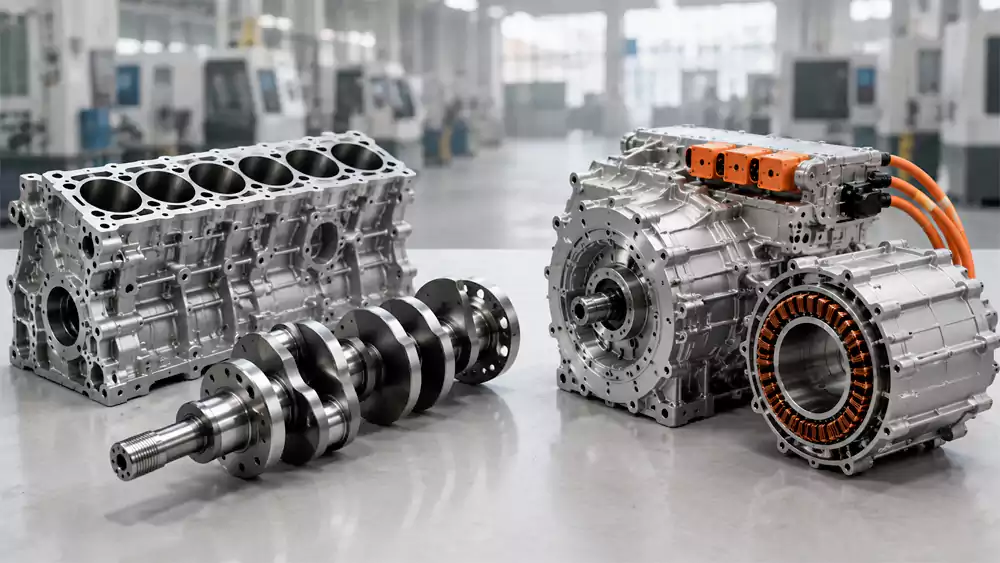
Powertrain technology is changing at a speed I have never seen before. Internal combustion engines still dominate many industries. At the same time, electric vehicles are creating new demands for lightweight parts, thermal management, and higher precision. Every project begins with a drawing. But success depends on much more than geometry. From my experience in investment casting, I have learned that the manufacturing partner becomes an extension of the engineering team. The right foundry turns a design into a reliable product. The wrong one turns every production run into a new problem.
What Are the Key Challenges in Sourcing Custom Engine & Powertrain Parts Today?
Finding a supplier is easy. Finding one that consistently delivers high-quality powertrain parts is much harder. Many projects fail because risks are underestimated during supplier selection.
Today's biggest sourcing challenges include tighter tolerances, shorter development cycles, stricter quality standards, supply chain uncertainty, and the need to support both ICE and EV platforms with flexible manufacturing capabilities.
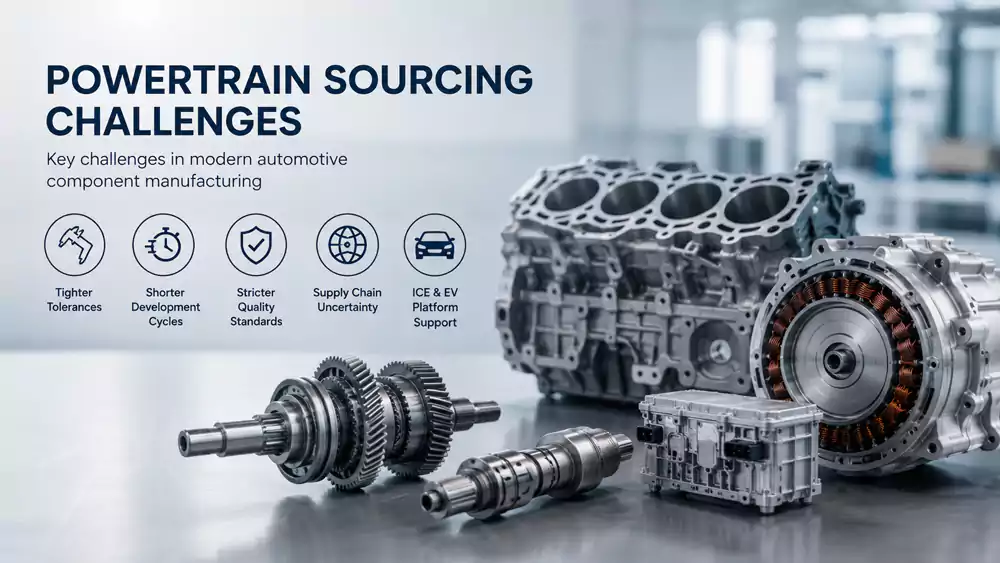
The Market Is Changing Faster Than Before
Powertrain systems now cover traditional engines, hybrid systems, electric drive units, reduction gearboxes, battery housings, cooling systems, and structural components. Each application demands different material properties and manufacturing methods.
Many buyers also face these common issues:
| Challenge | Business Impact |
|---|---|
| Shorter product development | Less time for design validation |
| More complex geometries | Higher manufacturing difficulty |
| Multiple material options | Harder engineering decisions |
| Global supply chain risks | Longer lead times |
| Higher quality expectations | Increased inspection costs |
Manufacturing Flexibility Matters
A supplier that only understands one manufacturing process may not deliver the best solution1. Some parts are ideal for investment casting. Others perform better with CNC machining or forging. I always recommend reviewing the function of the part before selecting the process.
As powertrain technology evolves, flexibility becomes a competitive advantage. Suppliers that combine casting, machining, prototyping, heat treatment, and surface finishing can support design changes without restarting the entire project.
How to Select the Right Materials and Manufacturing Processes?
Material selection influences strength, weight, corrosion resistance, wear life, thermal performance, and manufacturing cost. There is no universal solution.
The best material depends on operating temperature, load, corrosion environment, weight targets, and production volume. Manufacturing methods should always match both the material and the functional requirements of the component.
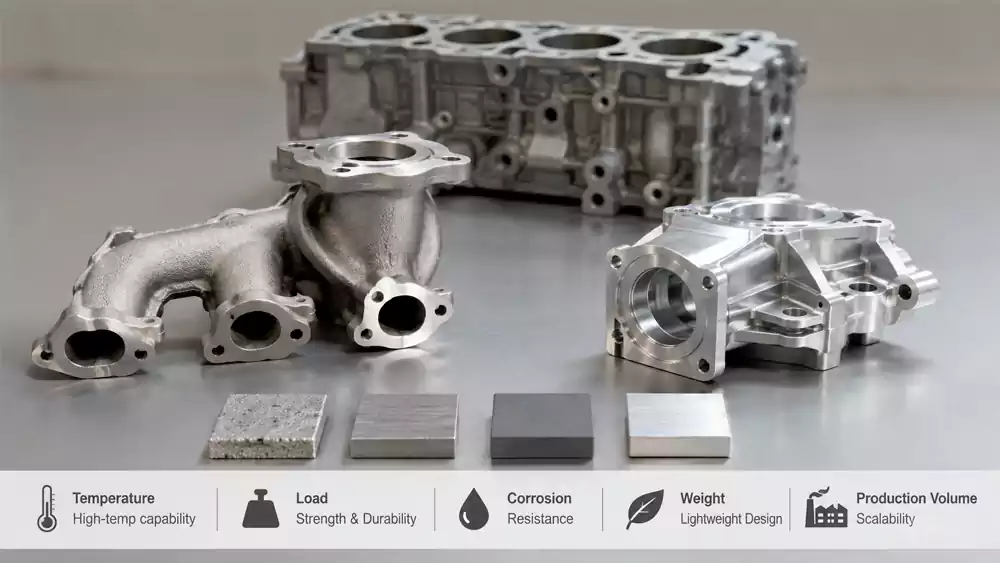
Common Materials Used in Powertrain Components
Different applications require different engineering priorities.
| Component | Recommended Material | Typical Manufacturing Process |
|---|---|---|
| Turbo housing | Stainless Steel 304 / 316 | Investment Casting |
| Transmission housing | Aluminum A356 | Investment Casting + CNC |
| Gear carrier | 42CrMo Alloy Steel | Forging + Machining |
| Motor housing | Aluminum 6061 | CNC Machining |
| Battery structural bracket | Aluminum 6063 | Extrusion + CNC |
| Cooling manifold | Stainless Steel | Investment Casting |
Selecting the Right Manufacturing Process
I normally evaluate several factors before recommending a production method:
- Part complexity
- Required tolerance
- Annual production volume
- Surface finish requirements
- Secondary machining needs
- Material utilization
- Total manufacturing cost
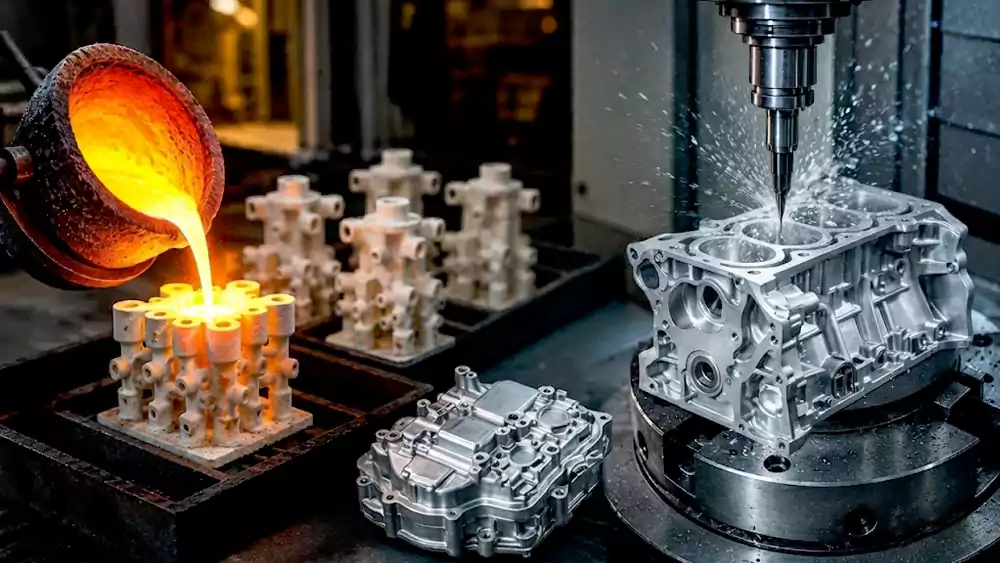
Investment casting performs very well when complex shapes, internal passages, or near-net-shape production are required. CNC machining delivers excellent precision for functional surfaces. Many successful projects combine both methods to balance cost and performance.
How Can Quality Assurance Reduce Risk Throughout the Project?
Quality should never begin after production starts. It begins during design review. Every manufacturing decision affects final reliability.
An effective quality assurance system includes design reviews, process validation, material certification, dimensional inspection, non-destructive testing, and production traceability throughout the manufacturing process.
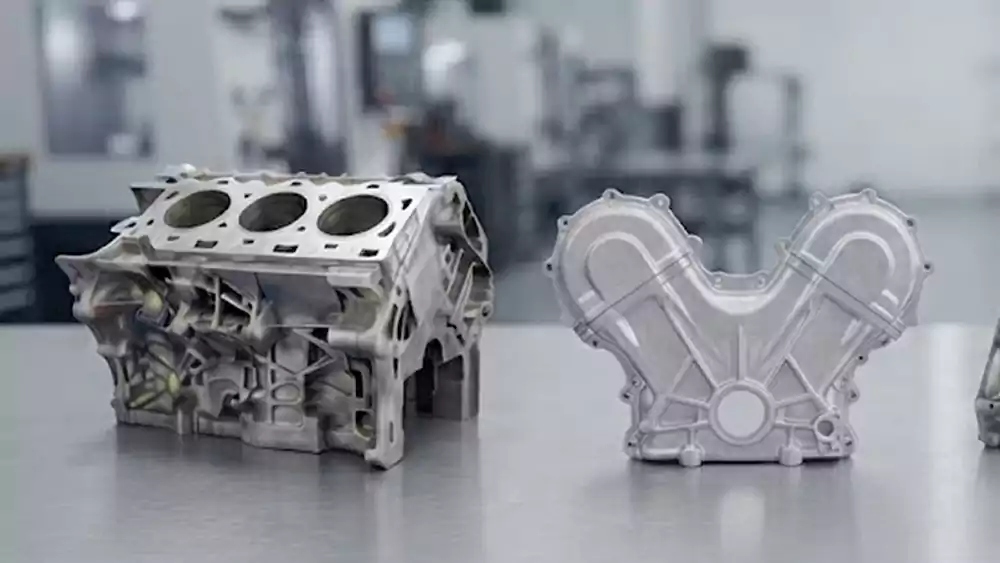
Quality Control Should Cover Every Stage
I like to divide quality assurance into several checkpoints.
| Production Stage | Inspection Focus |
|---|---|
| Design Review | Manufacturability analysis |
| Tooling | Pattern verification |
| Wax Assembly | Visual inspection |
| Shell Building | Thickness consistency |
| Pouring | Process parameter control |
| Heat Treatment | Mechanical property verification |
| Machining | Critical dimension inspection |
| Final Inspection | CMM, NDT, material reports |
Case Study: Investment Cast Differential Carrier
One project that impressed me involved a custom differential carrier for an off-road vehicle manufacturer. The customer needed higher fatigue strength without increasing weight.
| Parameter | Value |
|---|---|
| Material | ASTM A148 105-85 Steel |
| Manufacturing | Investment Casting + CNC Machining |
| Weight | 6.45 kg |
| Maximum Dimension | 238 mm |
| Annual Volume | 18,000 pcs |
| Dimensional Tolerance | ±0.10 mm on critical features |
| Surface Roughness | Ra 3.2 μm after machining |
| Heat Treatment | Quenched and Tempered |
| Tensile Strength | 860 MPa |
| Yield Strength | 720 MPa |
| Hardness | 270–300 HB |
During early sampling, we noticed slight deformation after heat treatment2. A senior foundry engineer with more than twenty years of casting experience suggested adjusting the gate layout and changing the heat treatment support fixture. We also modified several machining datum surfaces. After validation, dimensional consistency improved from 94.8% to 99.6%, and production remained stable during the following eighteen months.
This project reminded me that quality improvements often come from practical production knowledge, not only computer simulation.
How to Choose the Right Manufacturing Partner for Long-Term Powertrain Projects?
The supplier relationship lasts much longer than the quotation process. Long-term success depends on communication, engineering support, and continuous improvement.
A strong manufacturing partner provides engineering feedback, stable production capability, transparent quality systems, rapid communication, and continuous support from prototype development through mass production.
Beyond Manufacturing Capacity
When I evaluate a long-term supplier, I pay attention to much more than equipment.
| Evaluation Area | What I Look For |
|---|---|
| Engineering Team | Design optimization ability |
| Process Capability | Multiple manufacturing technologies |
| Quality System | ISO certifications and traceability |
| Communication | Fast technical response |
| Prototype Support | Rapid iteration capability |
| Capacity Planning | Stable delivery schedule |
| Continuous Improvement | Process optimization mindset |
Partnership Creates Better Products
The best suppliers ask questions before production starts. They review drawings carefully. They suggest small design improvements that reduce machining time or improve casting quality. These discussions often save far more money than negotiating a lower unit price.
In my experience, long-term cooperation creates better products because both sides understand each other's standards, expectations, and engineering priorities. That trust becomes one of the most valuable assets in complex manufacturing projects.
FAQs About Custom Engine & Powertrain Parts
Can one supplier support both ICE and EV components?
Yes. Manufacturers with investment casting, CNC machining, and assembly capabilities can often support both product families efficiently.
Which manufacturing process offers the best balance between cost and complexity?
For complex metal geometries with medium to high production volumes, investment casting usually provides an excellent balance between cost, precision, and material utilization.
How early should suppliers participate in product development?
The earlier, the better. Early design reviews often eliminate manufacturing risks before tooling begins.
What quality documents should buyers request?
Material certificates, dimensional reports, CMM inspection reports, heat treatment records, NDT reports when required, PPAP documentation if applicable, and complete production traceability.
How important is prototype validation?
Prototype validation is essential. It verifies manufacturability, confirms dimensional accuracy, identifies process risks, and reduces expensive design changes during mass production.
Conclusion
Whether you are developing components for a high-performance combustion engine or a next-generation electric drivetrain, successful projects begin with informed engineering decisions and the right manufacturing strategy.
From material selection and process optimization to quality assurance and production scalability, every decision influences the final performance of the part. That is why the best manufacturing partner is more than a supplier—they become an extension of your engineering team, helping transform complex designs into reliable, production-ready components that perform with confidence in the real world.
-
"(PDF) Process Selection from Design to Manufacture", https://www.academia.edu/36651495/Process_Selection_from_Design_to_Manufacture. Manufacturing-process selection is generally treated as a function of component requirements, including geometry, material, tolerances, production volume, and performance conditions; consequently, no single process is optimal for every part. Evidence role: mechanism; source type: paper. Supports: A supplier that only understands one manufacturing process may not deliver the best solution because the appropriate process depends on the function and requirements of the part.. Scope note: This evidence supports the process-selection principle but does not independently establish the performance of any particular supplier. ↩
-
"Simulation of Distortion and Residual Stress Development During Heat ...", https://digital.library.unt.edu/ark:/67531/metadc839951/. Materials-engineering studies describe dimensional distortion as a possible consequence of heat-treatment thermal gradients, phase transformations, and residual-stress redistribution in steel components; this provides general process context but does not independently verify the deformation reported in this project. Evidence role: mechanism; source type: paper. Supports: Steel components can undergo dimensional deformation during heat treatment.. Scope note: The evidence supports the general mechanism, not the specific component, measurement, or production outcome described here. ↩