
Many buyers struggle with material selection because carbon steel covers a wide range of grades, properties, and performance levels. A wrong choice can lead to failures, delays, and unnecessary costs.
Carbon steel is an iron-carbon alloy containing up to about 2.1% carbon. Its performance depends mainly on carbon content, manufacturing methods, and heat treatment. Low carbon steel offers excellent formability, while high carbon steel provides greater hardness and wear resistance for demanding applications.
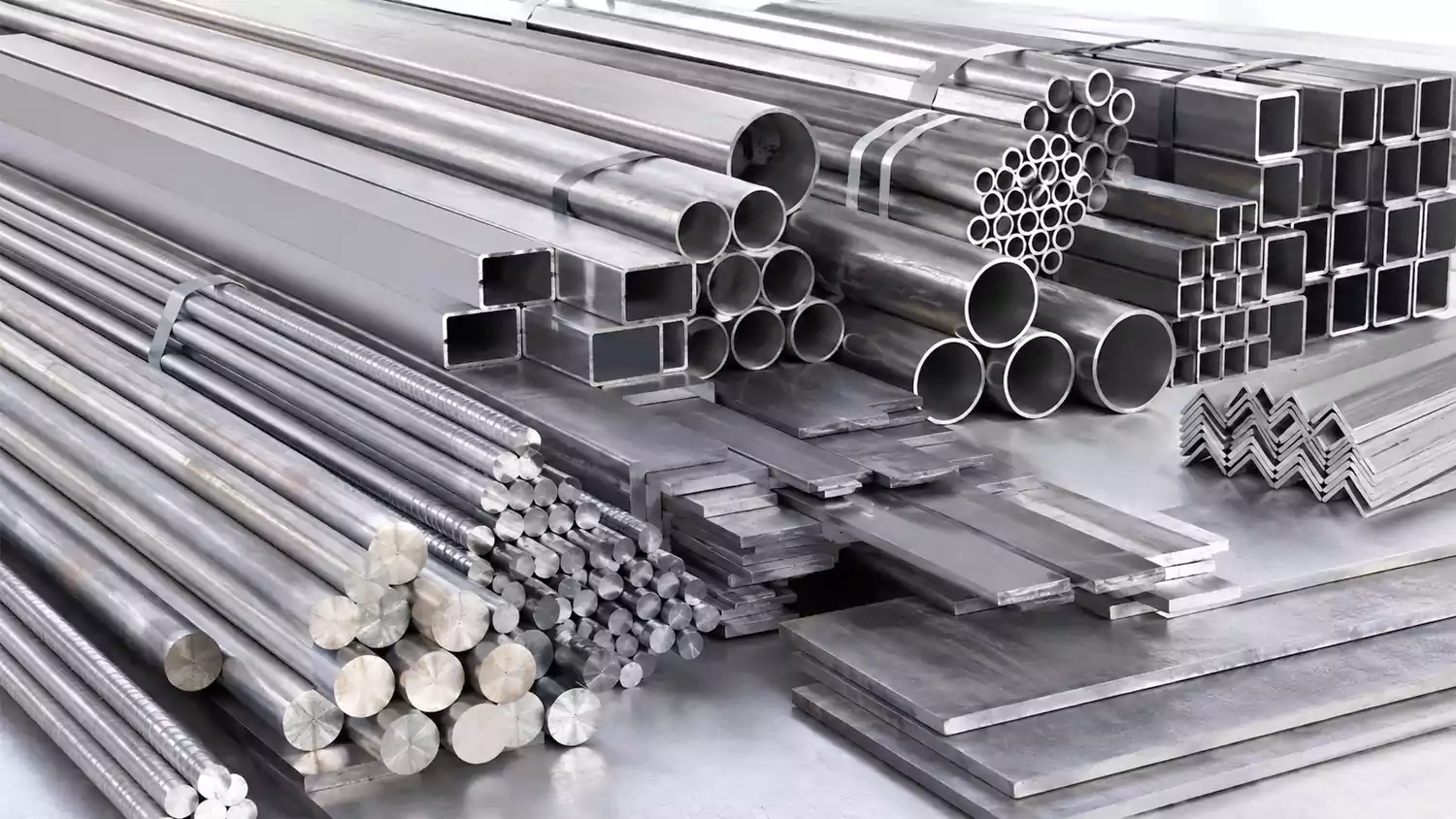
When customers ask me whether carbon steel is a good material, my answer is always the same: it depends on how the steel is made and treated. During my years in investment casting, I learned that the real value of carbon steel is not the material itself. The value comes from controlling chemistry, heat treatment, and manufacturing processes. Those factors determine whether a part bends easily, resists wear, or survives high-pressure service.
What Is Carbon Steel?
Choosing steel without understanding its composition often creates confusion. Many engineers assume all carbon steels behave similarly. That assumption can lead to poor material performance.
Carbon steel is a steel alloy made primarily from iron and carbon, with carbon acting as the main strengthening element. Increasing carbon content improves hardness and strength but reduces ductility, weldability, and formability.
Understanding Carbon Steel Composition
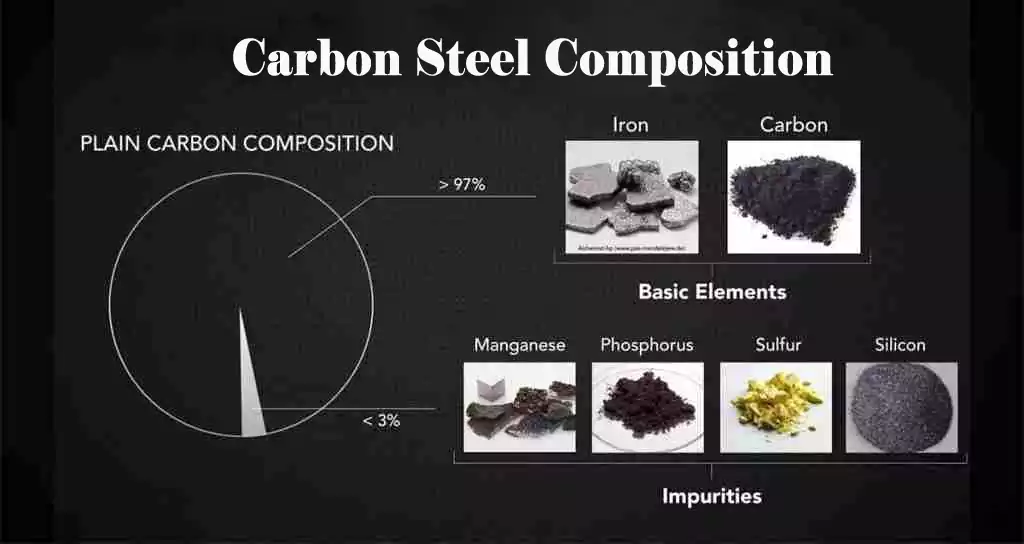
Carbon steel contains iron as the base element. Carbon is added to improve strength and hardness. Small amounts of manganese, silicon, sulfur, and phosphorus may also be present.
The carbon percentage is the primary factor that controls performance.1
| Steel Type | Carbon Content | Typical Characteristics |
|---|---|---|
| Low Carbon Steel | 0.05% - 0.25% | Soft, ductile, easy to weld |
| Medium Carbon Steel | 0.25% - 0.60% | Balanced strength and toughness |
| High Carbon Steel | 0.60% - 1.00%+ | High hardness and wear resistance |
I often explain this concept to customers using a simple rule. Low carbon steel is for forming. High carbon steel is for wear resistance. Alloy steel is for high pressure. This guideline solves many material selection questions before they become production problems.
Carbon steel remains one of the most widely used engineering materials because it provides an excellent balance of cost, strength, machinability, and availability. That is why it appears in everything from automotive parts and industrial machinery to construction equipment and investment cast components.
For engineers evaluating casting materials, understanding the differences between forged and cast grades is equally important. Many of the most commonly specified carbon steel casting materials are designed to deliver reliable mechanical properties while maintaining excellent castability.
Types, Grades and Properties of Carbon Steel?
Many sourcing managers compare steel grades only by price. That approach often overlooks critical performance differences that affect service life and maintenance costs.
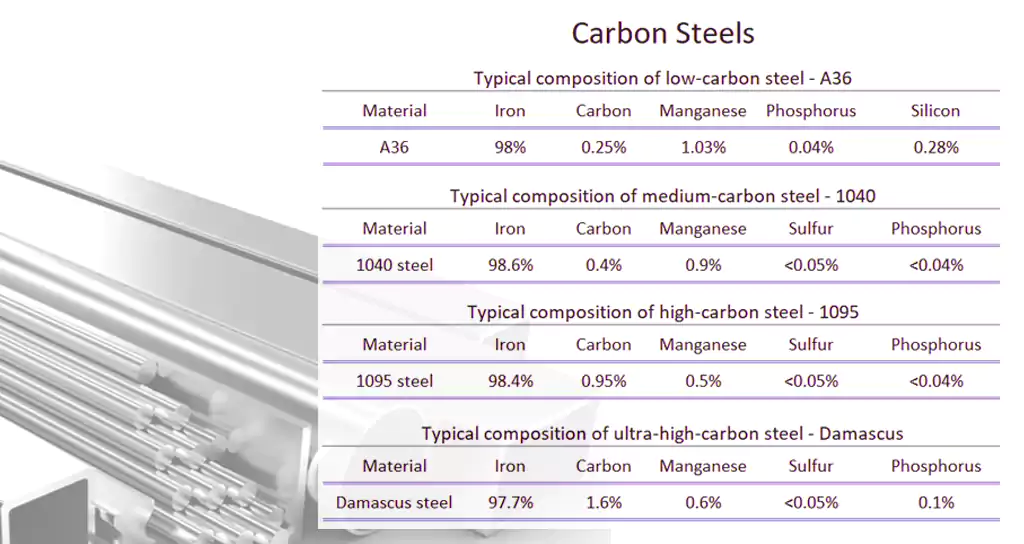
Carbon steel grades are classified mainly by carbon content and mechanical properties. Common grades such as ASTM A36, AISI 1018, AISI 1045, and AISI 1095 provide different levels of strength, hardness, machinability, weldability, and wear resistance.
Common Carbon Steel Grades
The most widely used grades serve different engineering needs.
| Grade | Carbon % | Tensile Strength (MPa) | Common Uses |
|---|---|---|---|
| AISI 1018 | 0.18% | 440-540 | Shafts, brackets, fasteners |
| ASTM A36 | 0.25% max | 400-550 | Structural components |
| AISI 1045 | 0.45% | 565-700 | Gears, axles, machinery parts |
| AISI 1095 | 0.95% | 700+ | Springs, blades, wear parts |
Mechanical Property Trends
As carbon content rises:
- Hardness increases
- Tensile strength increases
- Wear resistance improves
- Weldability decreases
- Ductility decreases
I have seen customers replace expensive alloy materials with properly heat-treated medium carbon steel and achieve nearly identical performance. The key is understanding the actual loading conditions instead of selecting materials based only on maximum strength values.
For aerospace and energy sector buyers like Michael, material certification becomes equally important. Mechanical properties must be supported by traceable heat treatment records, chemical analysis reports, and process documentation2. A grade is only as reliable as the manufacturing controls behind it.
How Is Carbon Steel Manufactured and Heat Treated?
Many performance problems originate during production rather than material selection. Even the correct steel grade can fail if processing is poorly controlled.
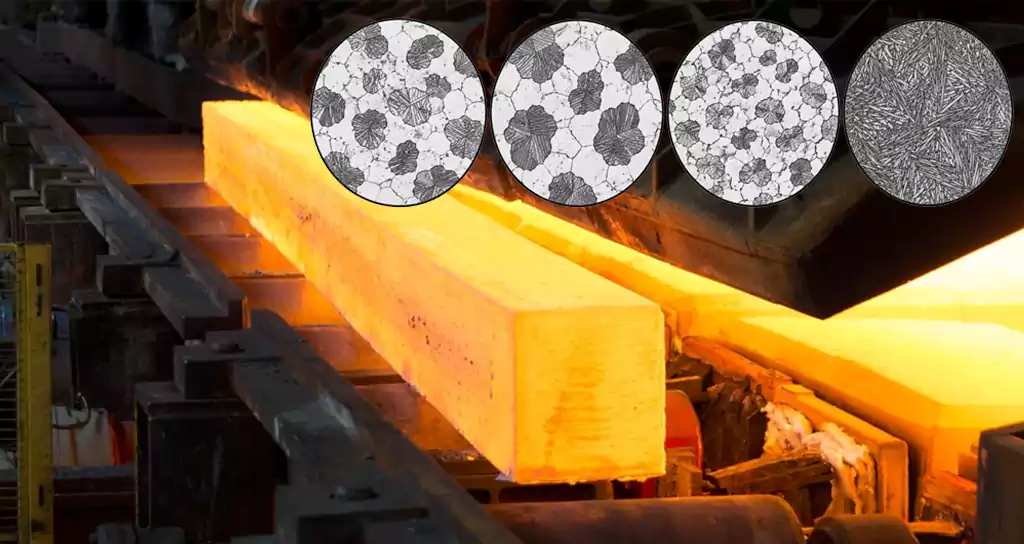
Carbon steel is manufactured through melting, refining, casting, forming, and heat treatment processes. Heat treatments such as annealing, normalizing, quenching, and tempering are used to achieve specific combinations of strength, hardness, toughness, and machinability.
Manufacturing Process Overview
A typical production route includes:
- Raw material charging
- Steel melting
- Chemical composition adjustment
- Casting or continuous casting
- Hot rolling or forging
- Heat treatment
- Machining and finishing
Heat Treatment Effects3
| Process | Purpose | Result |
|---|---|---|
| Annealing | Reduce hardness | Improved machinability |
| Normalizing | Refine grain structure | Better toughness |
| Quenching | Increase hardness | Higher strength |
| Tempering | Reduce brittleness | Balanced performance |
Case Study: Investment Cast Valve Body
Several years ago, I worked with a senior foundry engineer who had over 25 years of casting experience. His team produced a custom carbon steel valve body for a high-pressure energy application.
| Parameter | Value |
|---|---|
| Material | ASTM A216 WCB Carbon Steel4 |
| Casting Process | Investment Casting |
| Weight | 18.6 kg |
| Overall Dimensions | 245 × 180 × 135 mm |
| Operating Pressure | 8.5 MPa |
| Heat Treatment | Normalize + Temper |
| Hardness | 187 HB |
| Yield Strength | 275 MPa |
| Tensile Strength | 485 MPa |
| Inspection Standard | ASTM E446 Radiography |
| Machining Allowance | 2.5 mm |
The customer initially requested an alloy steel solution. The foundry team reviewed the operating conditions and determined that normalized and tempered WCB carbon steel would satisfy all requirements. Testing confirmed compliance with strength, toughness, and pressure containment targets. The customer reduced material costs by approximately 18% while maintaining required performance.
This project reinforced a lesson I have seen many times. Material selection works best when chemistry, casting quality, and heat treatment are considered together rather than independently.
Carbon Steel vs Stainless Steel, Alloy Steel and Cast Iron?
Material selection becomes difficult when several metals appear capable of meeting the same specification. Many buyers focus only on strength and overlook environmental conditions.
Carbon steel differs from stainless steel, alloy steel, and cast iron in corrosion resistance, alloy content, strength, toughness, and cost. Carbon steel offers the best balance of performance and affordability for many industrial applications.
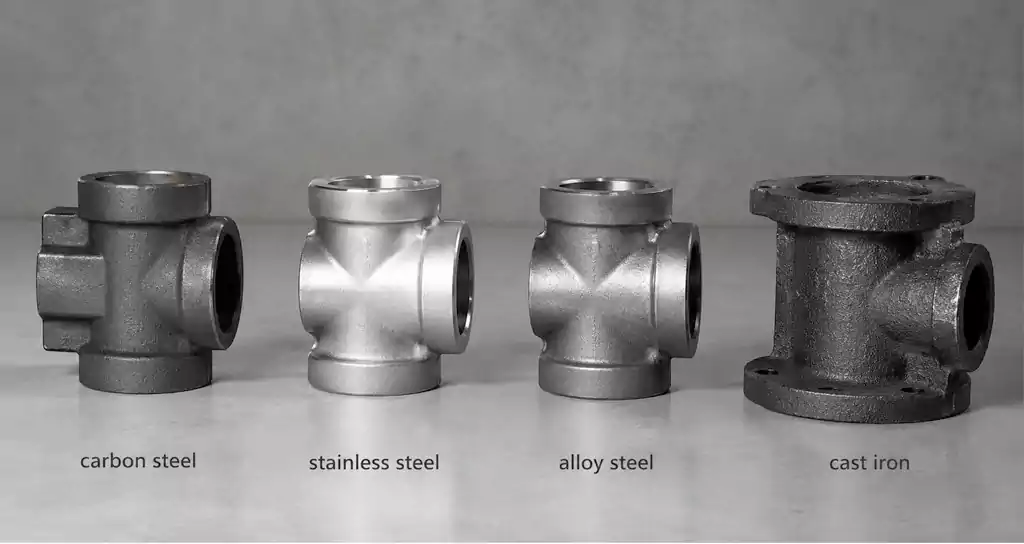
Material Comparison
| Property | Carbon Steel | Stainless Steel | Alloy Steel | Cast Iron |
|---|---|---|---|---|
| Corrosion Resistance | Low | Excellent | Moderate | Low |
| Strength | Good | Good | Excellent | Moderate |
| Toughness | Good | Good | Excellent | Low |
| Cost | Low | High | Medium-High | Low |
| Weldability | Good | Moderate | Moderate | Poor |
When To Choose Each Material
Carbon Steel
- Structural components
- General machinery
- Pressure-containing castings
- Cost-sensitive projects
- Corrosive environments
- Food processing equipment
- Marine applications
Alloy Steel
- High-pressure systems
- Elevated temperatures
- Heavy-duty machinery
Cast Iron
- Machine bases
- Engine blocks
- Vibration damping applications
I often see engineers specify stainless steel simply because corrosion resistance sounds safer. Yet many indoor industrial applications operate successfully with coated carbon steel at a fraction of the cost. Understanding the service environment usually reveals the most economical choice.
What Are the Main Applications and How Should You Select Carbon Steel?
Selecting the wrong grade can increase manufacturing costs or reduce component life. The challenge is matching material properties to actual operating conditions.
Carbon steel is widely used in construction, automotive, energy, agriculture, and industrial machinery. Material selection should consider strength requirements, wear conditions, corrosion exposure, manufacturing methods, certification needs, and overall project cost.
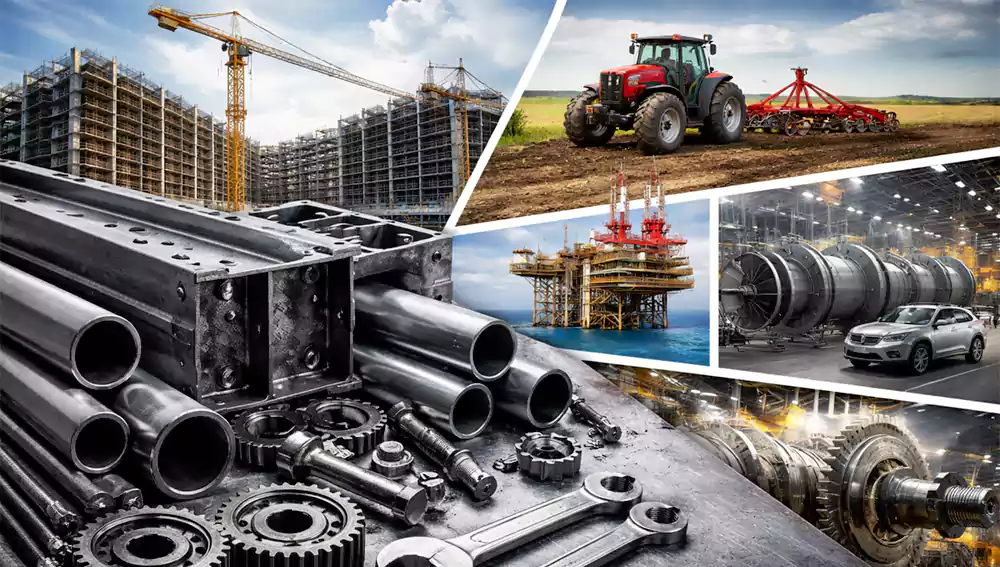
Common Applications
| Industry | Typical Components |
|---|---|
| Construction | Beams, columns, plates |
| Automotive | Shafts, gears, brackets |
| Energy | Valves, flanges, fittings |
| Manufacturing | Machine frames, tooling |
| Agriculture | Wear parts, housings |
Material Selection Checklist
Before recommending a carbon steel grade, I normally review:
- Required strength level
- Wear resistance requirements
- Corrosion exposure
- Welding requirements
- Heat treatment capability
- Machining requirements
- Certification requirements
- Budget constraints
For sourcing and quality professionals, supplier capability is often as important as material choice. A qualified foundry should provide full traceability, documented process controls, inspection records, and responsive technical support. Those factors reduce risk long before production begins.
Conclusion
Carbon steel remains one of the most practical and versatile engineering materials available today. Its success does not come from carbon content alone. It comes from selecting the right grade, applying the right manufacturing process, and controlling heat treatment to match the demands of the application. When those factors work together, carbon steel delivers reliable performance, predictable quality, and outstanding value across a wide range of industries.

Footnote:
-
"Effect of Carbon Content on the Mechanical Properties of Medium ...", https://www.academia.edu/145574750/Effect_of_Carbon_Content_on_the_Mechanical_Properties_of_Medium_Carbon_Steels. A metallurgical reference should support that carbon content is a principal determinant of plain carbon steel properties because it changes microstructure, hardenability, strength, ductility, and hardness. Evidence role: mechanism; source type: education. Supports: The carbon percentage is the primary factor that controls performance.. Scope note: Carbon content is not the only determinant; heat treatment, cooling rate, impurities, and processing history also affect performance. ↩
-
"Metal Certification Requirements for Aerospace Manufacturing", https://dynamicmetalsltd.com/metal-industry-news/as9100-compliance-metal-certification-requirements-for-aerospace-manufacturing/. Aerospace or pressure-equipment quality standards and guidance commonly require material traceability and documentation such as material test reports, chemical composition verification, heat-treatment records, and process records to demonstrate conformity of critical metallic components. Evidence role: expert_consensus; source type: institution. Supports: For aerospace and energy sector buyers, mechanical properties should be supported by traceable heat treatment records, chemical analysis reports, and process documentation.. Scope note: Such standards provide contextual support for regulated aerospace and energy applications; documentation requirements vary by contract, jurisdiction, component criticality, and governing specification. ↩
-
"Understanding Steels and Heat Treatment - ASM International", https://www.asminternational.org/video/understanding-steels-and-heat-treatment/. A metallurgy reference should support that common steel heat treatments such as annealing, normalizing, quenching, and tempering are used to modify hardness, grain structure, strength, toughness, and brittleness. Evidence role: mechanism; source type: education. Supports: Annealing, normalizing, quenching, and tempering produce the listed changes in machinability, toughness, hardness, strength, and brittleness.. Scope note: Such a source would support the general metallurgical mechanisms, not the exact results for every carbon steel grade or part geometry. ↩
-
"A216/A216M Standard Specification for Steel Castings, Carbon ...", https://www.astm.org/a0216_a0216m-21.html. The ASTM A216/A216M specification describes WCB as a grade of carbon steel castings used for valves, flanges, fittings, and other pressure-containing parts, providing contextual support for its selection in a cast valve body. Evidence role: definition; source type: institution. Supports: ASTM A216 WCB is an appropriate carbon steel casting grade to discuss in the context of cast valve bodies and pressure-containing components.. Scope note: The standard identifies material scope and grade context; it does not by itself verify the specific valve body’s test results, service pressure suitability, or cost comparison. ↩