
Oil pump housings may look simple on a drawing, but small casting defects or uneven walls can cause distortion, leaks, and premature failure in service.
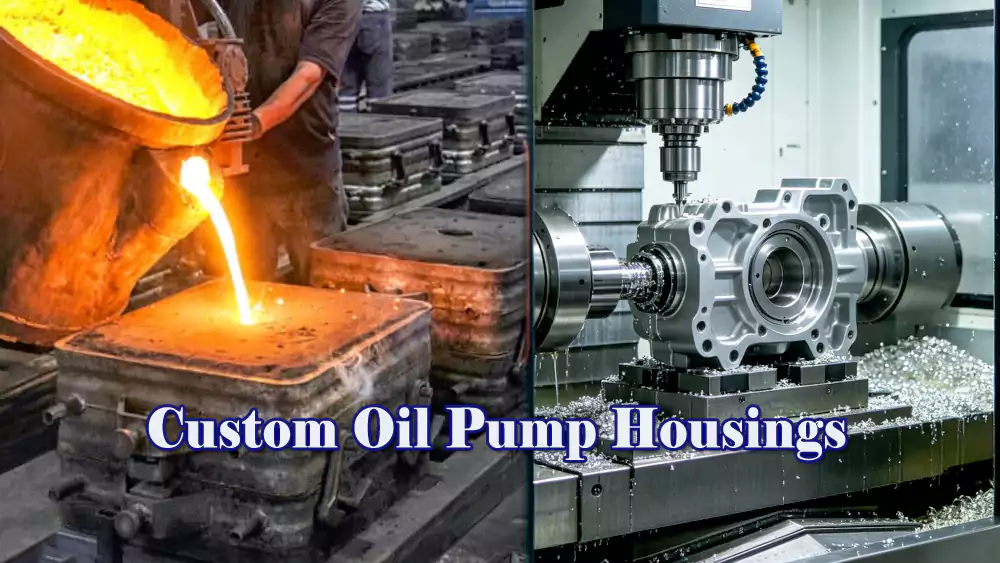
Custom oil pump housings are commonly made from aluminum alloys, cast iron, or other engineering alloys selected for the required strength, heat resistance, corrosion resistance, and weight. Complex housings are often cast near-net shape and then precision CNC machined to achieve accurate bores, sealing faces, mounting holes, and other critical features.
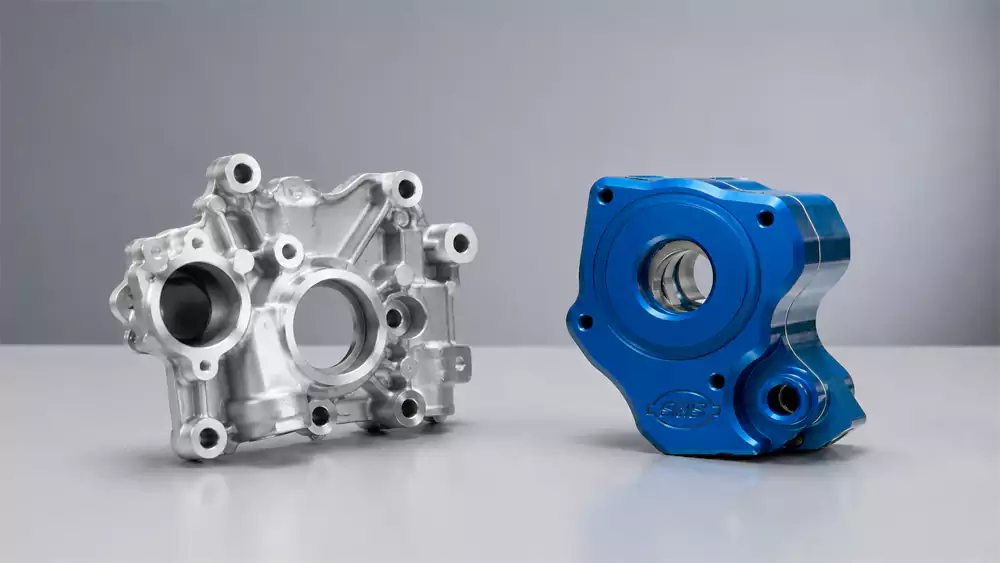
The dimensions on a drawing only tell part of the story. From my experience on the shop floor, wall thickness and internal casting integrity often have a much bigger effect on whether an oil pump housing performs reliably after it leaves the factory.
What Materials Are Used for Custom Oil Pump Housings?
A material can meet a specification on paper and still create problems during casting or machining. I always look at the operating temperature, pressure, weight requirements, corrosion environment, machining requirements, and production volume before selecting an alloy.
Aluminum alloys are often selected for oil pump housings when low weight, good thermal conductivity, and corrosion resistance are important, while cast iron is considered when higher stiffness, wear resistance, and dimensional stability are required. The operating environment should determine the final material choice.
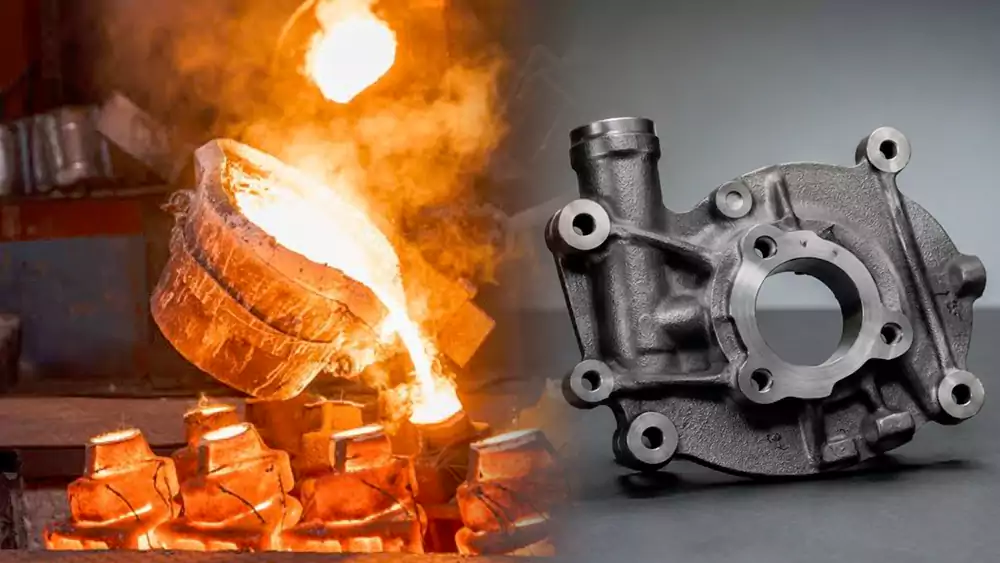
Aluminum Alloys
I commonly consider aluminum alloys for automotive and industrial oil pump housings because they provide a useful combination of low density, strength, and machinability. Aluminum also transfers heat well, which can help in applications where the housing operates close to a hot engine.
For a custom project, I do not select an alloy only because it is easy to machine. I first look at the actual function of the housing. The housing may need to maintain stable dimensions around bearing bores and sealing surfaces while also resisting vibration and temperature changes.1
Casting also makes it possible to produce ribs, mounting bosses, curved passages, and other shapes without machining the entire component from a solid block.
Cast Iron and Other Alloys
Cast iron can be a better choice when the housing needs higher stiffness and wear resistance. Its higher density makes it less attractive for weight-sensitive automotive applications, but it can still be useful in industrial equipment and heavy-duty systems.
I also evaluate corrosion resistance and compatibility with the oil environment. The housing should not only survive the initial test. It needs to maintain its mechanical and dimensional properties during long-term operation.
| Material | Main Advantage | Typical Consideration |
|---|---|---|
| Aluminum alloy | Low weight and good thermal conductivity | Control distortion and casting defects |
| Cast iron | High stiffness and wear resistance | Higher weight and machining effort |
| Stainless or specialty alloys | Corrosion and temperature resistance | Higher material and machining cost |
The correct material is therefore a manufacturing decision as much as an engineering decision. I prefer to review the material, casting method, wall thickness, machining requirements, and final inspection requirements together before production begins.
How Are Custom Oil Pump Housings Manufactured?
The manufacturing process should be planned around the finished part, not around the casting alone. I normally divide the process into casting, heat treatment when required, machining, surface treatment when specified, and final inspection.
Custom oil pump housings are typically manufactured by casting the main body near net shape, followed by heat treatment when required, precision CNC machining of functional surfaces and holes, deburring, cleaning, and final inspection. This approach combines efficient casting with the dimensional accuracy of CNC machining.
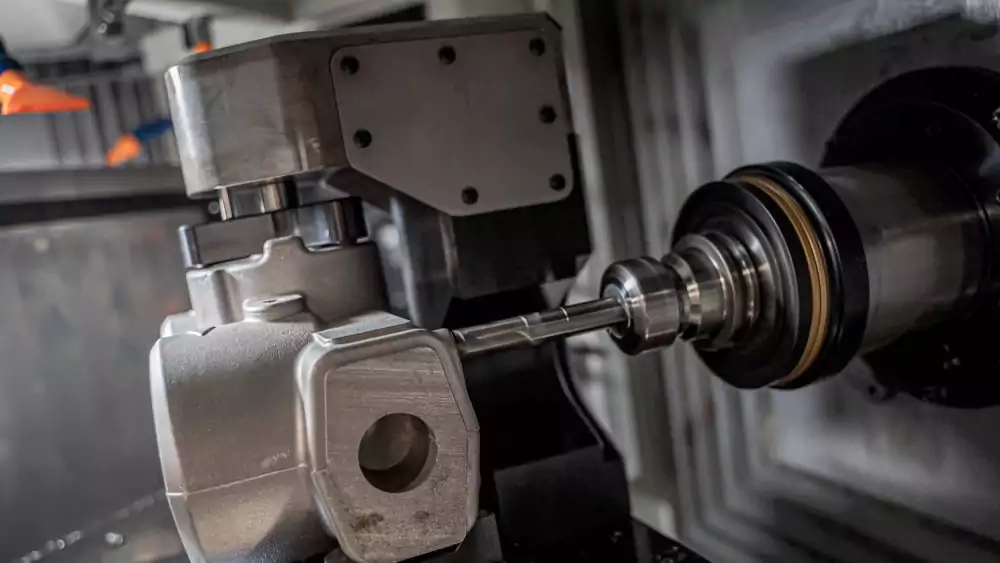
Casting Creates the Basic Housing
The first goal is to create a sound casting with consistent wall thickness. This is where I pay close attention to the areas that cannot be repaired later by machining.
An oil pump housing can contain internal cavities, passages, ribs, bosses, and relatively thin sections.2 If the metal does not fill the mold correctly, the resulting defect may remain hidden inside the component.
I pay particular attention to:
- Wall thickness consistency
- Internal cavities and passages
- Shrinkage-prone sections
- Draft and parting lines
- Ribs and mounting bosses
- Gate and riser locations
- Potential porosity and inclusions
For investment casting applications, the wax pattern reproduces the required geometry before the ceramic shell is formed. This process can be useful when the housing contains detailed features or when near-net-shape production can reduce subsequent machining.
CNC Machining Establishes Critical Dimensions
After casting, I machine the surfaces that directly affect assembly and pump performance. These may include the main bore, sealing faces, mounting surfaces, threaded holes, and locating features.
I do not try to remove excessive casting stock. I first make sure that the casting provides enough material for machining while avoiding unnecessary material that increases machining time and distortion risk.
A typical process may include:
- Casting and visual inspection
- Heat treatment if required by the material specification
- Datum establishment
- CNC milling of reference and mounting surfaces
- CNC boring of critical internal diameters
- Drilling and tapping
- Deburring and cleaning
- Dimensional inspection
- Leak or pressure testing when required
- Final documentation and shipment
For automotive applications, I use the same casting-and-machining principle when producing other complex engine and powertrain components. The housing is not an isolated manufacturing problem. Its geometry, material, machining strategy, and inspection requirements all need to work together.
This casting-plus-machining approach gives me much better control than treating the housing as a simple machined block.
What Design and Quality Factors Affect Oil Pump Housing Performance?
I have learned that oil pump housing quality is strongly influenced by features that are easy to overlook during the drawing stage. A housing can meet several dimensional checks and still have a serious internal problem.
The most important oil pump housing factors are wall thickness, internal casting integrity, dimensional stability, sealing surfaces, bore accuracy, material properties, and inspection requirements. I check these factors together because machining cannot correct hidden defects inside inaccessible casting sections.
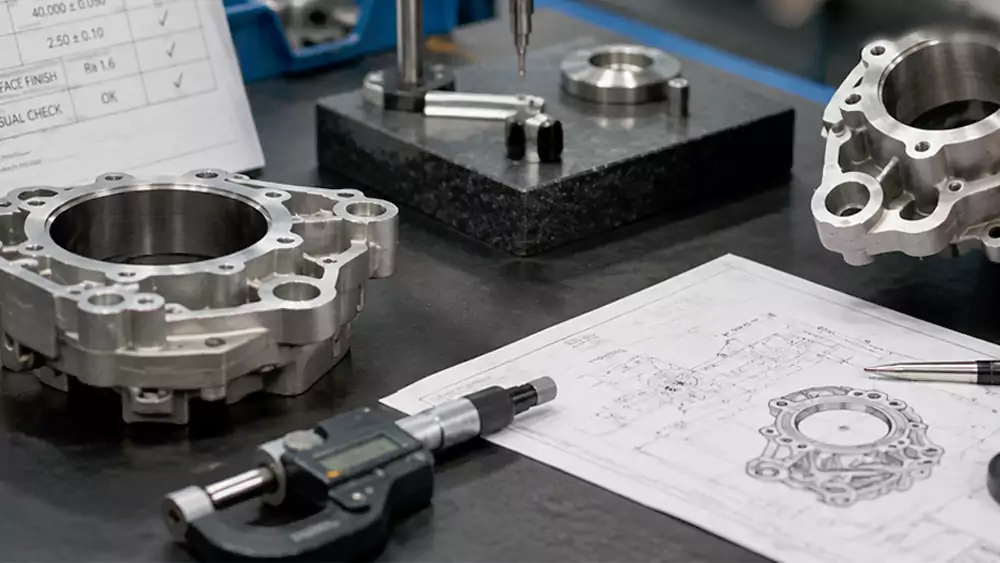
Wall Thickness and Internal Integrity
On paper, an oil pump housing has dimensions. In the field, it has wall thickness and internal integrity.
Get those wrong and you get distortion or leaks. I catch these problems in our shop so the customer does not catch them in the field.
Wall thickness needs enough material for structural strength, but unnecessary thickness can increase shrinkage and create uneven cooling. Sudden changes in section thickness can also increase the risk of casting defects.
This is why I review the casting geometry before production. I look for heavy sections, thin walls, sharp transitions, isolated bosses, and areas where metal flow or solidification may become difficult.
Critical Machining Features
Not every dimension on an oil pump housing has the same importance. I separate general dimensions from functional dimensions.
| Feature | Manufacturing Concern | Inspection Focus |
|---|---|---|
| Main bore | Alignment and dimensional stability | Diameter and position |
| Sealing face | Oil leakage risk | Flatness and surface finish |
| Mounting holes | Assembly accuracy | Position and thread quality |
| Internal cavity | Casting integrity | Visual or NDT inspection |
| Wall sections | Strength and distortion | Dimensional verification |
| Threads | Assembly reliability | Gauge inspection |
For critical housings, I also consider non-destructive testing when the application requires it. X-ray inspection can help identify internal porosity or shrinkage that cannot be seen from the outside. Dimensional inspection then confirms that the finished housing meets the drawing.
Case Study: Custom Cast Oil Pump Housing
I once worked on a custom housing project where the main concern was not machining tolerance alone. The customer had experienced leakage and dimensional variation with an earlier supplier.
For the new production approach, I focused first on the casting structure and then on the machining sequence.
| Parameter | Production Requirement |
|---|---|
| Part type | Custom oil pump housing |
| Material | Aluminum alloy |
| Approx. finished weight | 1.8 kg |
| Critical bore | Ø52 mm |
| Bore tolerance | ±0.02 mm |
| Sealing face flatness | ≤0.03 mm |
| Surface finish on sealing face | Ra ≤1.6 μm |
| Mounting-hole position | ±0.05 mm |
| Casting inspection | Visual + dimensional inspection |
| Critical internal areas | NDT inspection as specified |
| Final verification | CMM and functional checks |
The important lesson from this project was simple. We did not solve the problem by adding more CNC operations. We improved the casting design, controlled the wall sections, established reliable machining datums, and then verified the critical features.
That approach reduced the risk of machining a defective casting and helped create a more stable production process. This is also why I believe casting quality should be considered before machining precision. A cutter can correct an external dimension, but it cannot remove hidden porosity from an inaccessible internal wall.
How Should You Choose a Custom Oil Pump Housing Manufacturer?
A supplier should be able to do more than quote the drawing. I look for a manufacturer that understands how casting, machining, inspection, and application requirements affect one another.
I recommend choosing a custom oil pump housing manufacturer that can control casting, CNC machining, material quality, inspection, and production communication as one process. The supplier should identify casting and machining risks before mass production and provide inspection records for critical features.
Evaluate Casting Capability
First, I would ask how the supplier controls casting quality. The supplier should be able to explain how it manages wall thickness, shrinkage, porosity, filling, solidification, and dimensional variation.
I also want to know whether the manufacturer controls the process internally or depends heavily on outside suppliers. A supplier with direct control over casting and machining can usually respond faster when a problem appears between the two processes.
Check Machining and Inspection Capability
The manufacturer should have suitable CNC equipment for the housing geometry. More importantly, the machining process should use stable datums and a controlled sequence.
I would also ask how critical dimensions are inspected. Depending on the application, the supplier may use CMM inspection, bore gauges, surface-finish measurement, thread gauges, pressure testing, or non-destructive testing.
Review Quality Documentation
For a production project, I also recommend confirming what documentation will be provided. Material certificates, inspection reports, dimensional records, and traceability can become important when the component is used in a demanding engine or industrial system.
A good supplier should be willing to discuss these requirements before production instead of treating inspection as an afterthought.
Consider Communication and Engineering Support
I have found that supplier communication is often a better predictor of project success than a low initial quotation.
When I review a new oil pump housing, I want to understand what the customer is trying to achieve. Then I can discuss material, casting method, machining datums, inspection points, and production risks before the first part is made.
That early discussion can prevent expensive changes later. It also gives the customer a clearer idea of what is technically realistic.
For customers developing complete engine or powertrain assemblies, I can also apply this approach across a wider range of custom engine and powertrain parts solutions, where casting quality, machining accuracy, and functional requirements must work together.
Conclusion
A reliable custom oil pump housing starts with the right material and sound casting, then depends on controlled wall thickness, precise CNC machining, and inspection of both visible dimensions and internal integrity. I believe the best results come from identifying these risks before production rather than correcting them after failure. If you are developing a custom oil pump housing, I would be glad to review your drawing and discuss a practical manufacturing approach.
-
"Thermal Stability of Aluminum Alloys - PMC - NIH", https://pmc.ncbi.nlm.nih.gov/articles/PMC7435424/. Dimensional stability and resistance to deformation in components subjected to temperature variation and vibration depend on thermo-mechanical behavior (e.g., coefficient of thermal expansion, elastic modulus, and residual stresses), which are material- and process-dependent; the cited literature supports the mechanisms but not specific performance for any one housing geometry. Evidence role: mechanism; source type: paper. Supports: A housing may need stable dimensions around bearing bores and sealing surfaces while resisting vibration and temperature changes.. Scope note: The source can support the general thermo-mechanical mechanisms, but it may not directly validate this specific claim for oil pump housings or bearing/sealing features. ↩
-
"Casting Pump Body: Materials, Methods & Design", https://www.huanmingmachinery.com/news/industry-news/how-does-postprocessing-improve-the-performance-of-cast-pump-bodies.html. Aerospace and mechanical engineering references on oil pump housings describe typical casting geometries—including internal cavities/passages and ribs/bosses—found in pump bodies/housings. Evidence role: general_support; source type: encyclopedia. Supports: An oil pump housing can contain internal cavities, passages, ribs, bosses, and relatively thin sections.. Scope note: The support is likely descriptive and may not be specific to every oil pump design (e.g., different architectures and materials). ↩