
Choosing the wrong casting process often leads to porosity issues, unstable dimensions, or late design changes that increase cost and delay production.
High Pressure Die Casting (HPDC) is a high-efficiency metal casting process used to produce thin-wall, high-accuracy parts at scale. It is widely applied in automotive and industrial manufacturing where consistency, surface quality, and repeatability are critical.

I have worked with buyers and engineers who selected HPDC because it was familiar, not because it truly fit the part. In some cases, HPDC solved problems. In others, it created them. Understanding its real capabilities helps avoid that risk.
Why Does HPDC Matter in Modern Industrial Manufacturing?
Manufacturers face constant pressure to reduce weight, control cost, and maintain stable quality across large production volumes.
HPDC matters because it enables the mass production of complex aluminum and magnesium parts with tight dimensional control, smooth surfaces, and short cycle times that are difficult to achieve with other casting methods.
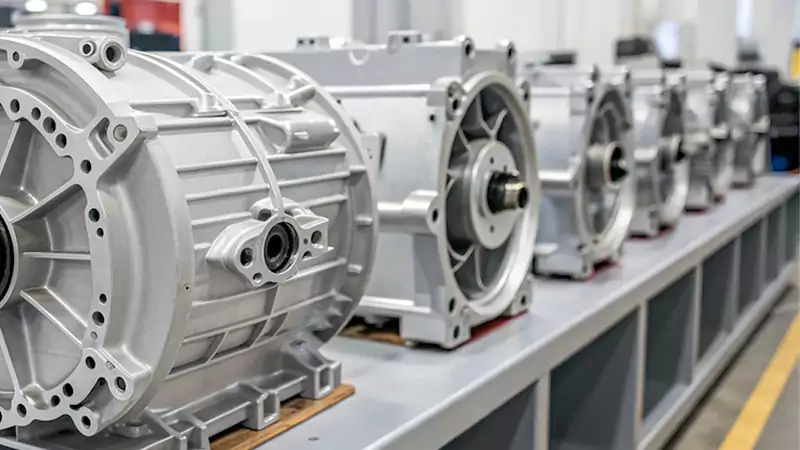
When I first supported automotive die casting lines, I saw how much value process stability brings. HPDC lines, once dialed in, can run for thousands of shots with minimal variation. This stability supports predictable cost and delivery, which is essential for OEM programs in the EU market.
Pressure from global competition
Manufacturers must control variation while scaling output. HPDC supports that need.
Demand for lightweight structures1
Thin-wall aluminum castings reduce system weight without sacrificing function.
High-volume production reality
HPDC suits long-term programs where tooling investment can be amortized.
What Is High Pressure Die Casting (HPDC) and How Does It Work?
Many professionals recognize HPDC by name but underestimate its process sensitivity.
HPDC injects molten metal into a hardened steel die at very high speed and pressure, allowing the cavity to fill rapidly and solidify into a near-net-shape part with fine surface detail.
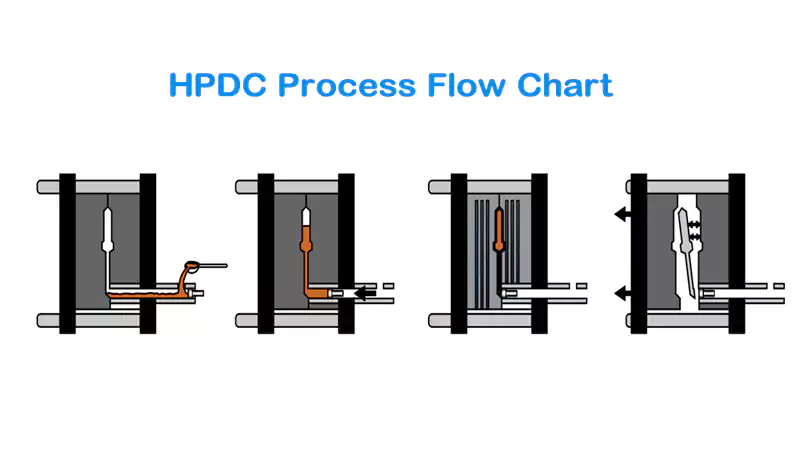
I describe HPDC as a balance of force and timing. When injection speed2, pressure, and temperature align, the process is powerful. When they drift, defects appear quickly.
What HPDC means in practice
Injection pressures often range from 30 to 120 MPa, depending on part design.
Core process stages
Molten metal is injected, packed, solidified, and ejected within seconds.
Typical performance range
HPDC supports thin sections and complex ribs, but internal soundness must be managed.
| Parameter | Typical Range |
|---|---|
| Wall thickness | 0.8–3.0 mm |
| Dimensional tolerance | ISO IT13–IT9 |
| Surface roughness | Ra 1.6–3.2 μm |
| Cycle time | 20–90 seconds |
What Are the Key Capabilities and Limitations of HPDC?
HPDC is highly effective when used within its design window, but it also imposes clear technical boundaries.
HPDC provides excellent dimensional consistency and surface quality for large production volumes, while placing limits on internal soundness, weldability, and part design flexibility.
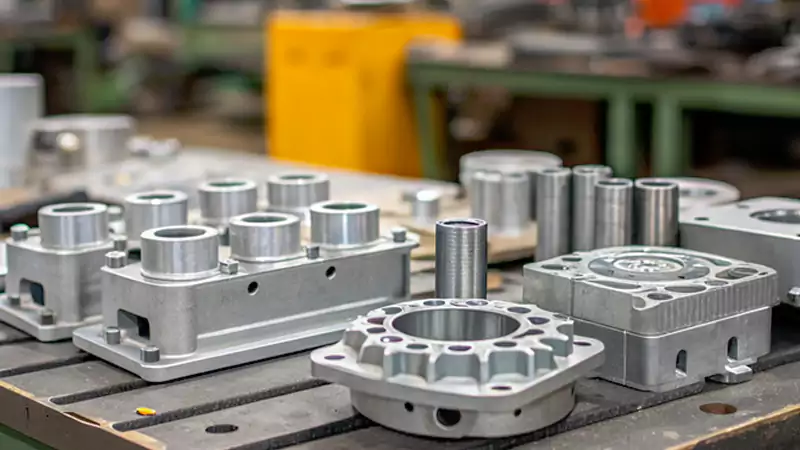
I have seen HPDC succeed and fail under similar quality systems. The difference was not inspection. It was understanding what the process can and cannot realistically deliver.
Capabilities of HPDC
High dimensional repeatability3
Once the die and process window are stabilized, HPDC delivers very consistent geometry across tens of thousands of parts. This makes it ideal for long-term programs where assembly fit and interchangeability matter.
Thin-wall and complex geometry capability
High-speed injection allows molten metal to fill thin ribs, deep pockets, and compact features that are difficult or impossible for gravity-based processes.
Excellent surface finish
HPDC produces smooth as-cast surfaces that often reduce cosmetic finishing effort, especially for painted or coated parts.
High production efficiency
Short cycle times support large annual volumes with predictable unit cost and delivery schedules.
Limitations of HPDC
Internal porosity risk4
Trapped gas and turbulent flow can create internal pores that reduce fatigue strength and limit pressure-tight or welded applications.
Limited weldability
Due to porosity and alloy composition, HPDC parts are generally not suitable for structural welding.
High tooling investment
Steel dies require significant upfront cost and lead time, making HPDC unsuitable for low-volume or short-life projects.
Sensitivity to process drift
Small changes in temperature, speed, or venting can quickly affect quality, requiring disciplined process control.
How Does HPDC Compare with Other Die Casting Methods?
Process comparison is where most sourcing errors are avoided.
HPDC, Gravity Die Casting (GDC), and Low Pressure Die Casting (LPDC) differ significantly in filling behavior, pressure control, internal quality, tooling economics, and the types of parts they support best.
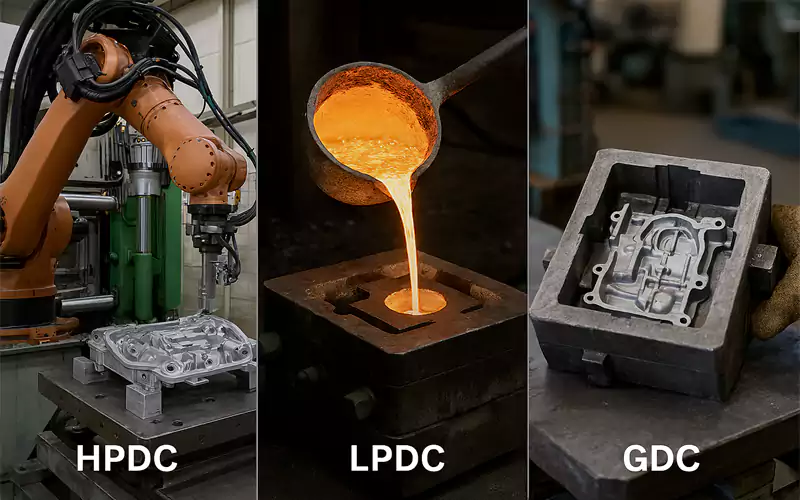
In sourcing reviews, I often see these processes treated as interchangeable. They are not. Each method creates metal flow and solidification in a very different way, which directly affects part integrity and long-term performance.
HPDC vs. Gravity Die Casting (GDC)
GDC relies on gravity to fill the mold, which creates slower and more uniform metal flow. This reduces gas entrapment and improves internal density. However, slow filling limits thin-wall capability and increases cycle time. GDC works well for medium-volume parts with thicker walls and higher structural demands, but it cannot match HPDC in surface finish or production speed.
HPDC vs. Low Pressure Die Casting (LPDC)
LPDC uses controlled low pressure to push molten metal upward into the die. This method offers excellent feeding and low porosity, making it ideal for pressure-tight or fatigue-loaded parts such as wheels or structural housings. The trade-off is longer cycle time, higher equipment cost, and reduced geometric freedom compared to HPDC.
Practical selection perspective
HPDC favors complexity and speed. GDC favors density and flexibility. LPDC favors integrity and performance.
| Comparison Factor | HPDC | GDC | LPDC |
|---|---|---|---|
| Filling method | High-speed injection | Gravity flow | Low-pressure feeding |
| Typical pressure | 30–120 MPa | None | 0.5–1.5 bar |
| Wall thickness | Very thin | Medium–thick | Medium |
| Surface finish | Excellent | Moderate | Good |
| Internal porosity | Higher | Lower | Very low |
| Weldability | Limited | Good | Very good |
| Cycle time | Very fast | Slow | Medium |
| Tooling cost | High | Medium | High |
| Ideal volume | High | Medium | Medium–high |
| Best applications | Thin-wall housings | Structural parts | Pressure-tight parts |
What Engineering Considerations Define Successful HPDC Parts?
Well-designed HPDC parts begin with realistic engineering assumptions.
Successful HPDC parts follow disciplined rules for wall thickness, draft, material choice, and gating design, while planning defect control and secondary machining from the start.
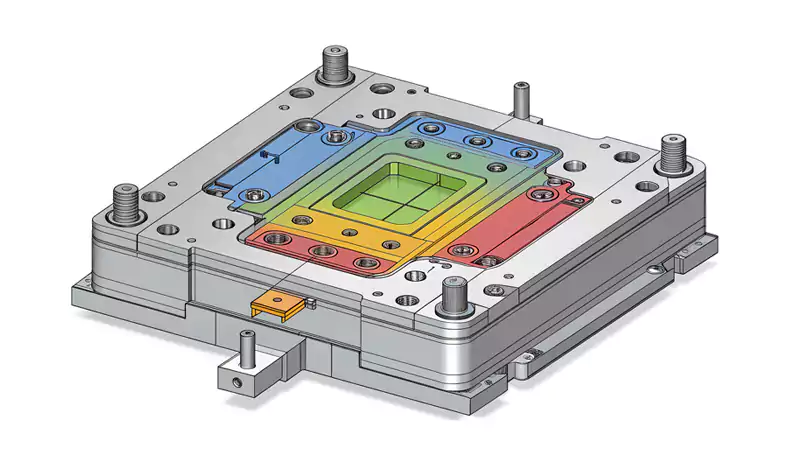
I have helped customers improve yield simply by adjusting early design details. These changes rarely affect function but strongly affect stability.
Material selection logic
Aluminum alloys such as A380, ADC12, and EN AC grades balance flow and strength.
Geometry that supports stability
Uniform walls reduce shrinkage stress. Proper draft protects die life.
Managing common defects
Vacuum systems, gate layout, and venting reduce trapped gas but add complexity.
Planning for post-processing
HPDC parts often require CNC machining, tapping, or surface treatment to meet final specs.
Where Is HPDC Used, and How Should a Supplier Be Evaluated?
Application fit matters as much as process capability.
HPDC is widely used in automotive, motorcycle, industrial, and agricultural equipment, where supplier experience, tooling control, and process transparency define long-term success.

I advise buyers to look beyond unit price. A stable HPDC supplier explains risks early and controls variation over time.
Typical HPDC applications
Motor housings, transmission covers, brackets, and electronic enclosures are common.
Quality control expectations
X-ray inspection, dimensional audits, and process records protect production stability.
Supplier capability priorities
Engineering communication, tooling management, and secondary machining support matter most.
Case Study: Custom HPDC Aluminum Housing for Industrial Automation
| Parameter | Value |
|---|---|
| Part type | Servo drive housing |
| Alloy | EN AC-46000 |
| Net weight | 2.6 kg |
| Wall thickness | 1.4–2.3 mm |
| Annual volume | 48,000 pcs |
| Critical tolerance | ±0.04 mm |
| Casting process | Vacuum-assisted HPDC |
| Secondary process | CNC machining5 + powder coating |
The customer needed a lightweight housing with stable dimensions and low vibration. By rebalancing gate flow, improving vacuum efficiency, and tightening thermal control, internal porosity dropped sharply. Machining time fell by 12%, scrap stayed below 1.8%, and delivery reliability improved across the full production cycle.
Conclusion
HPDC delivers speed, precision, and scalability, but only when design intent, production volume, and performance requirements align with its process limits.
-
Discover the significance of lightweight structures in automotive design and how they impact performance and efficiency. ↩
-
Understanding injection speed is crucial for optimizing the HPDC process and minimizing defects. ↩
-
Understanding high dimensional repeatability can enhance your knowledge of HPDC's capabilities and its impact on production quality. ↩
-
Exploring the causes of internal porosity risk will help you grasp the challenges in HPDC and improve your design and manufacturing strategies. ↩
-
A Comprehensive Guide to Exploring CNC Machining Services ↩