
Last updated on April 22, 2026, by Lucy
I often see projects delayed because the wrong material was chosen early. This leads to rework, defects, and cost increases that are hard to recover.
The best die casting material depends on performance needs, design constraints, and total cost, and choosing the right alloy early helps reduce machining, improve consistency, and avoid expensive redesigns.
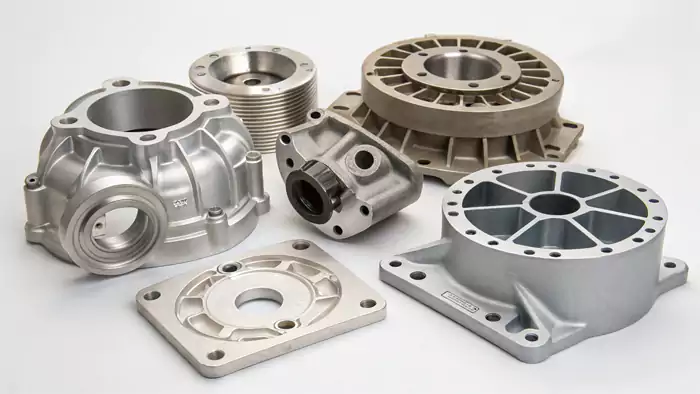
I remember a project where we chased low material cost. We ignored machining. That decision doubled our total cost. Since then, I always look at the full picture.
Common Die Casting Alloys and Their Characteristics?
Many buyers feel unsure when facing multiple alloy options. The names are technical, and the differences are not obvious at first.
Aluminum, zinc, and magnesium are the most common die casting materials, and each differs in weight, strength, precision, and cost, making them suitable for different engineering and production scenarios.
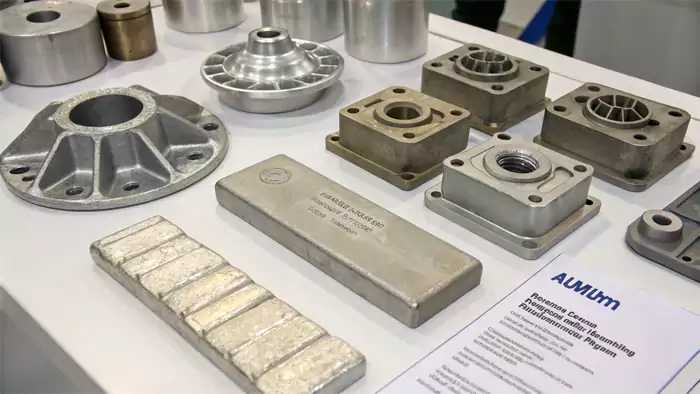
I used to default to aluminum for everything. Over time, I learned that zinc solved tolerance issues better, and magnesium helped when weight was critical.
Aluminum Die Casting Alloys (e.g., A380, A360)
I use A380 most often. It balances strength, cost, and castability. A360 performs better in corrosion environments but is harder to process.
Zinc Die Casting Alloys (Zamak series)
Zamak alloys1 flow very well. They fill thin sections easily. I use them for small, complex, high-precision parts.
Magnesium Die Casting Alloys2
Magnesium is very light. It is ideal when weight reduction is critical. However, it needs stricter process control.
Other Materials (Copper-based, etc.)
Copper alloys offer excellent strength and conductivity. But they are expensive and harder to cast. I only use them when necessary.
Comparative Overview: Aluminum vs Zinc vs Magnesium
| Property | Aluminum (A380) | Zinc (Zamak 3) | Magnesium (AZ91D) |
|---|---|---|---|
| Density (g/cm³) | 2.7 | 6.6 | 1.8 |
| Strength | Medium | High | Medium |
| Castability | Good | Excellent | Good |
| Corrosion Resistance | Good | Moderate | Moderate |
| Tool Life | Medium | Long | Medium |
| Machining Need | Moderate | Low | Low |
I always remind my clients that density is not the only factor. The downstream cost often matters more. If you stop here, you risk picking a material that looks good on paper but fails in production.
Key Properties and Performance Requirements?
Many engineers choose materials based on habit. This often leads to performance issues later in testing or production.
Engineers select die casting materials based on mechanical strength, thermal behavior, corrosion resistance, and dimensional stability, as these properties directly determine product reliability, lifespan, and performance under real conditions.
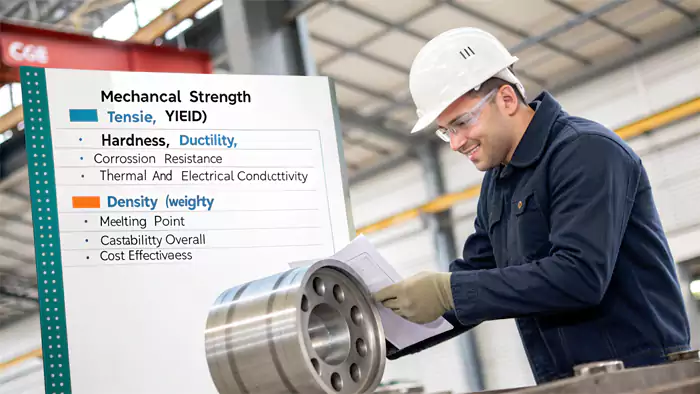
I once worked on a sealing component. The wrong alloy caused micro-leakage. That experience changed how I evaluate materials.
Mechanical Properties (Strength, Ductility, Hardness)
Strength is critical for load-bearing parts. Zinc has high strength but lower ductility. Aluminum offers a balanced profile.
Thermal and Electrical Conductivity
Aluminum performs well in heat dissipation. I often use it in electronic housings.
Corrosion Resistance3
Some environments require better resistance. A360 or coated parts perform better in these cases.
Dimensional Stability
Zinc maintains tight tolerances better. This reduces machining and improves consistency.
Performance Requirements by Industry
Automotive Applications
Weight reduction is important. Aluminum and magnesium are common choices.
Medical Devices
Precision and surface quality matter most. Zinc is often preferred.
Industrial & Hydraulic Equipment
Strength and pressure resistance are critical. Aluminum is widely used.
Case Study: Custom Pump Housing Optimization
I worked with a senior engineer with over 20 years of casting experience. We redesigned a hydraulic pump housing.
| Parameter | Value |
|---|---|
| Material | Aluminum A380 |
| Process | High-pressure die casting |
| Wall Thickness | 3.5 mm |
| Tolerance | ±0.04 mm |
| Surface Finish | Anodized |
| Porosity Limit | < 0.8% |
| Annual Volume | 85,000 units |
| Machining Reduction | 38% |
We adjusted the design for better flow and reduced porosity. The result was fewer defects and lower machining cost. If you ignore performance requirements, you often pay later in failure testing and redesign.
How to Select the Right Die Casting Material?
This is where most decisions go wrong. Many teams move too fast and skip structured evaluation.
Selecting the right die casting material requires matching product design, load conditions, production volume, and total cost through a structured workflow that reduces risk and ensures manufacturability.
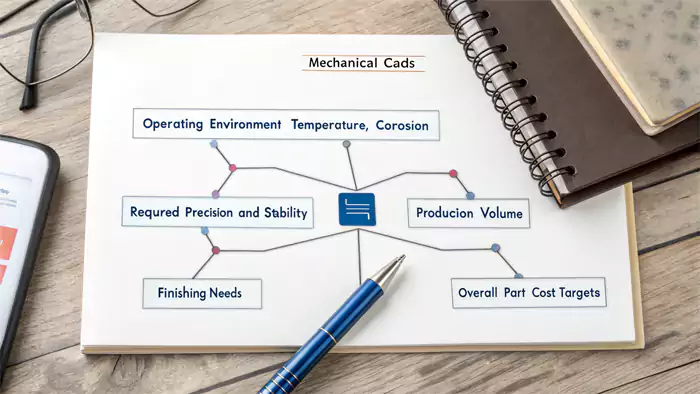
I now follow a strict process. It helps me avoid mistakes and keeps projects on track.
Key Selection Factors
Product Design Requirements
Complex geometry and thin walls often favor zinc.
Load and Stress Conditions
High loads require stronger alloys like aluminum or copper-based materials.
Production Volume
High volume supports die casting investment. Zinc tooling lasts longer.
Cost Considerations
I always calculate total cost, not just raw material price.
Material Selection Workflow
- Define product requirements
- Evaluate load and environment
- Shortlist materials
- Check manufacturability
- Compare total cost
- Validate with samples
This structured approach keeps decisions practical and data-driven.
Design for Manufacturability (DFM) Considerations
Wall Thickness
Improper thickness leads to defects. Balance is critical.
Tolerances
Zinc supports tighter tolerances than aluminum.
Porosity Risks4
Aluminum is more prone to porosity. Proper mold design reduces risk.
I have seen projects fail because DFM was ignored. If you do not align design with process, even the right material will not save you.
Standards, Cost, and Supplier Considerations?
Many buyers focus only on unit price. This often leads to quality issues and supply risks.
Material standards, certifications, supplier capability, and total landed cost all play a critical role in successful die casting sourcing, and ignoring these factors often leads to quality failures and hidden costs.
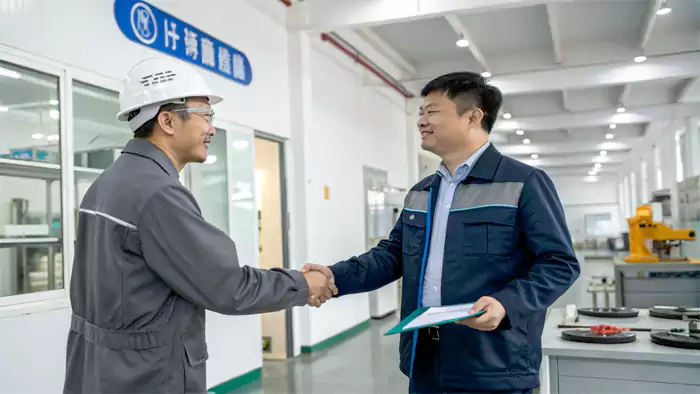
I have audited suppliers that looked cheap on paper but failed in documentation and consistency. That creates bigger problems later.
Material Standards and Certifications
ASTM Standards
These define composition and mechanical properties.
EN Standards
These are required for many European projects.
RoHS & REACH Compliance5
These ensure environmental and regulatory compliance.
Cost Factors in Die Casting
Material Cost
This is only one part of the total cost.
Tooling Cost
Tool life varies by material. Zinc molds last longer.
Secondary Operations
Machining and finishing often drive cost higher.
Surface Finishing Options
- Powder coating
- Anodizing
- Electroplating
Each option affects both performance and appearance.
Manufacturing Capabilities
When I evaluate a supplier, I look beyond die casting. I focus on full manufacturing capability.
Precision investment casting is critical for complex parts that cannot be achieved with die casting alone. I often use it for aerospace or high-performance components.
Investment casting allows tighter control over complex geometry. It produces near-net shape parts with excellent surface finish. This reduces machining time and improves material efficiency.
I have worked on parts with intricate internal channels. Die casting could not achieve the required geometry. Investment casting solved the problem with consistent quality.
A strong supplier should offer:
- Precision investment casting for complex geometries
- CNC machining for tight tolerances
- Heat treatment for performance control
- Inspection systems for quality assurance
This combination ensures flexibility and reliability across different project needs.
How to Evaluate a Die Casting Supplier
Quality Control Systems
Look for inspection reports and process control.
Certifications (ISO 9001, IATF 16949)
These indicate system reliability.
Engineering Support
A strong supplier helps improve your design and reduce cost.
I always say this to my clients: if your supplier cannot support engineering decisions, you are carrying the risk alone.
Conclusion
I always focus on total cost, performance, and manufacturability. The right material choice, combined with the right process and supplier, reduces risk, improves quality, and drives long-term success.
If you are evaluating materials for a die-casting project, our engineering team can help review your drawings and guide you in avoiding pitfalls in the material data sheets.
-
Explore this link to understand why Zamak alloys are preferred for small, complex, high-precision parts due to their excellent flow and filling properties. ↩
-
Learn more about Magnesium alloys to see why they are ideal for weight-critical applications despite requiring stricter process control. ↩
-
Learn effective methods and materials to enhance corrosion resistance, ensuring longer lifespan and reliability of components. ↩
-
Learn effective mold design strategies to minimize porosity in aluminum parts, improving product reliability and performance. ↩
-
Explore this link to understand how environmental and regulatory compliance impacts supplier selection and product safety. ↩