
Machines fail when friction is ignored. I have seen costly downtime caused by choosing the wrong component. Many buyers still confuse bushings and bearings.
A bushing is a type of bearing used for sliding motion, while bearings as a broader category often use rolling elements for higher speed and lower friction. The right choice depends on load, speed, environment, and cost.
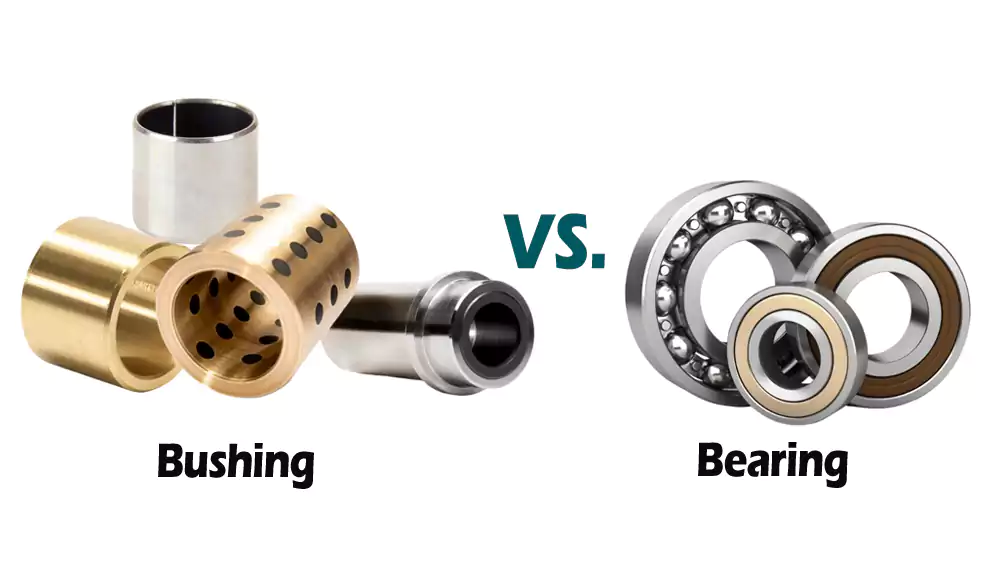
I often guide clients through this exact confusion. The choice is not just technical. It directly affects cost, lifespan, and reliability in real production.
What Is a Bushing?
Many people assume bushings are too simple to matter. I made that mistake early in my career. That mindset can lead to poor performance and early wear.
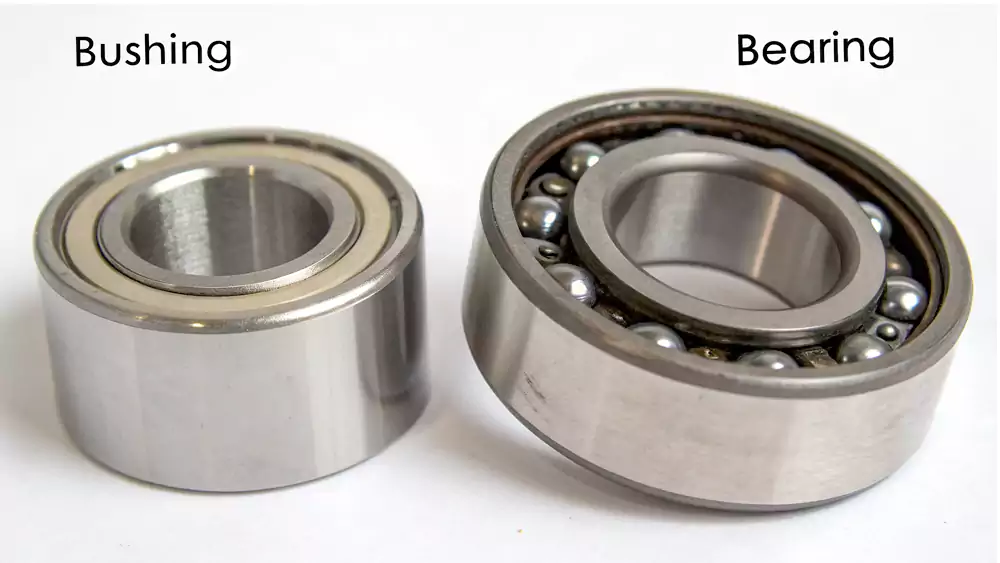
A bushing is a plain bearing that supports motion through sliding contact between surfaces, offering a simple, low-cost solution for handling high loads at low speeds.
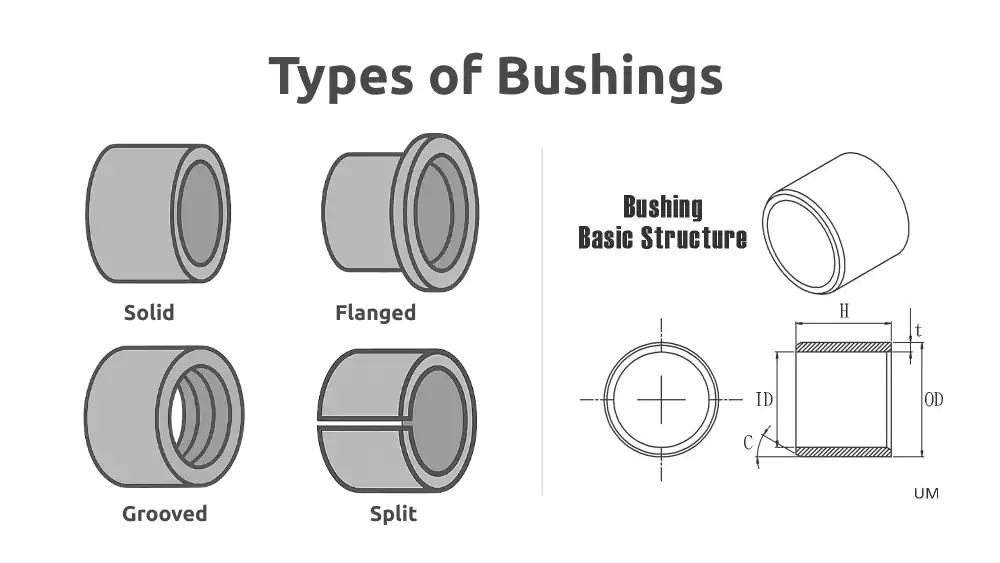
I have seen many systems improved just by switching to the right bushing material. Simple does not mean ineffective.
Bushings work through direct surface contact. There are no rolling elements. This makes them strong and easy to maintain. I often recommend them when space is limited or when cost must stay low.
How Bushings Work
A bushing reduces friction by creating a controlled sliding interface. It often relies on lubrication or self-lubricating materials1. The shaft moves directly against the inner surface.
Types of Bushings
I usually group them like this:
- Sleeve bushings
- Flanged bushings
- Thrust bushings
- Split bushings
Each type solves a different problem. I choose based on load direction and installation needs.
Common Materials
Material selection matters a lot. I often use:
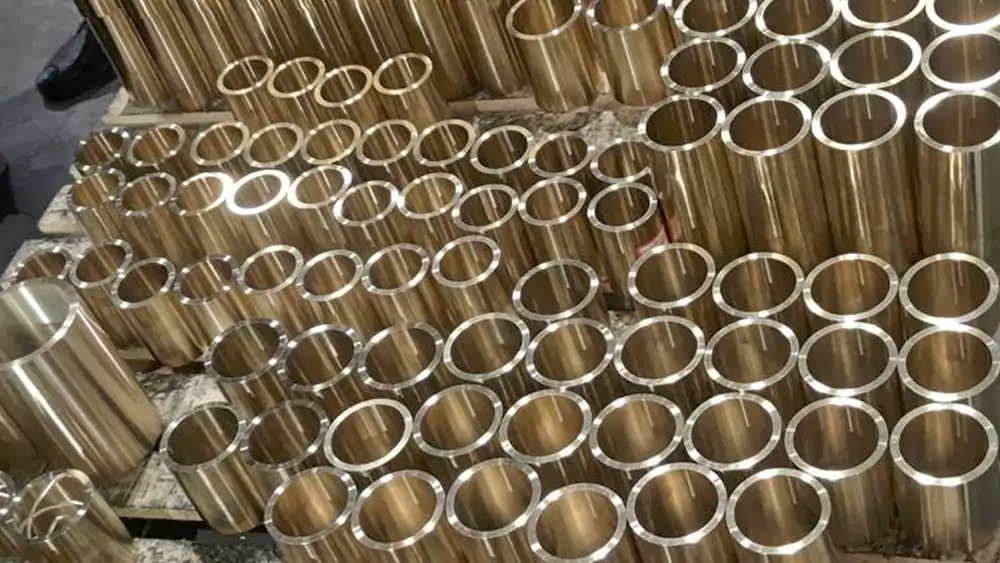
- Bronze for wear resistance
- Brass for easy machining
- PTFE composites for self-lubrication
- Nylon for lightweight and corrosion resistance
In dirty environments, I prefer composite bushings2 because they reduce maintenance.
What Is a Bearing?
Many buyers think all bearings are the same. That is not true. I have seen projects overspend because of this assumption.
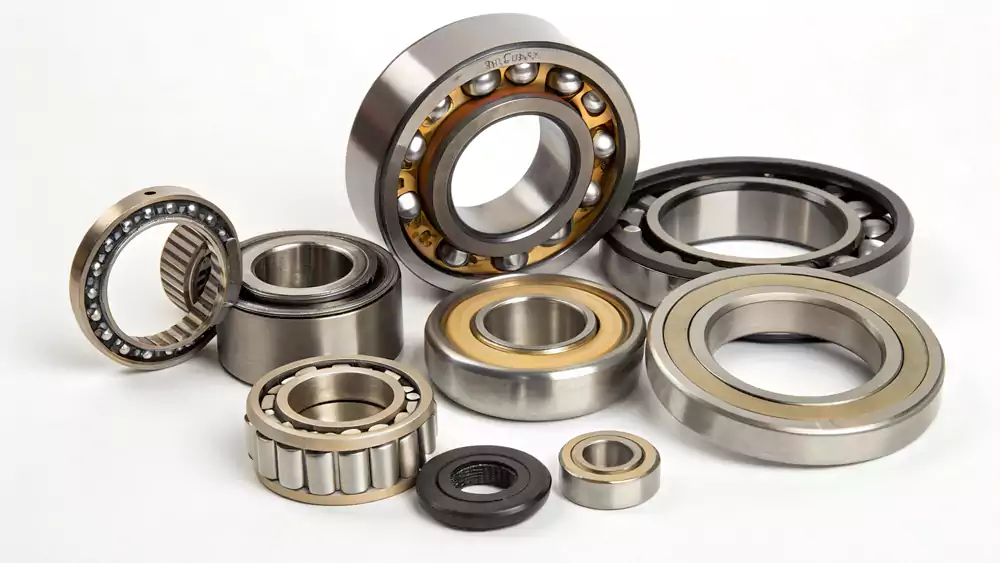
A bearing is a mechanical component that reduces friction using rolling elements such as balls or rollers, allowing higher speed operation and improved efficiency compared to sliding contact.
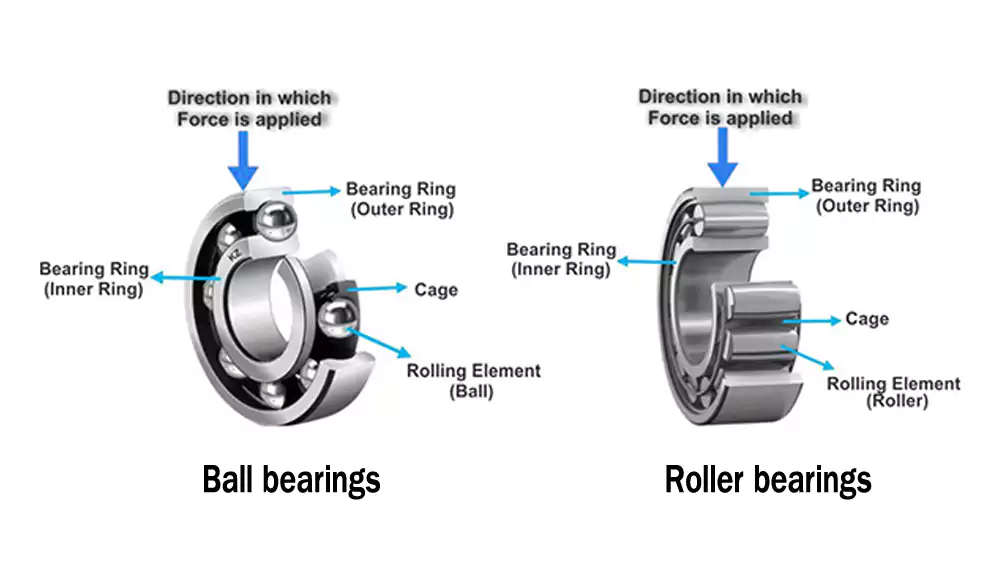
When speed and efficiency matter, I always look at bearings first. They are built for performance.
Bearings rely on rolling motion3 instead of sliding. This reduces friction and heat. It also improves lifespan in high-speed systems.
Working Principle
Rolling elements sit between inner and outer rings. These elements carry the load and reduce direct contact between surfaces.
Main Types
I often use:
- Ball bearings
- Roller bearings
- Needle bearings
- Thrust bearings
Each type fits a different load and speed condition.
Common Materials
Precision matters here. Common materials include:
- Hardened steel
- Stainless steel
- Ceramic
Ceramic options4 work well in extreme environments. I recommend them when performance is critical.
Key Differences Between Bushings and Bearings?
This is the question I hear most often. It usually comes right before a purchasing decision.
Bushings use sliding motion and are simpler and more cost-effective for high-load, low-speed use, while bearings use rolling motion, support higher speeds, and provide lower friction but at higher cost and complexity.
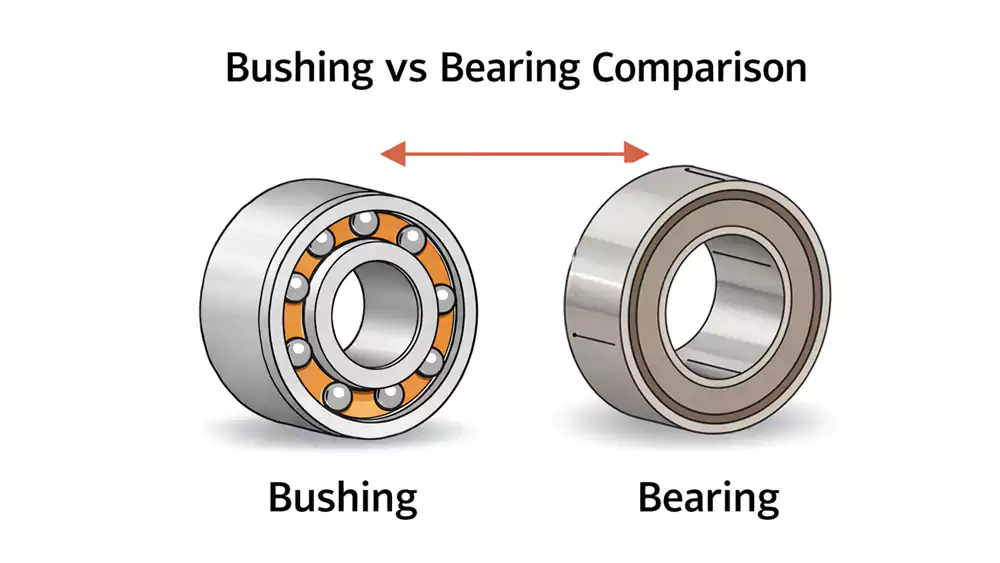
This comparison often clears up confusion quickly. It helps buyers make faster and safer decisions.
Core Comparison
| Factor | Bushing | Bearing |
|---|---|---|
| Motion Type | Sliding | Rolling |
| Load | High load, low speed | Moderate to high, higher speed |
| Speed | Low | High |
| Cost | Low | Higher |
| Maintenance | Low (self-lubricating types) | Requires lubrication |
My Practical Insight
I always simplify it like this:
- Choose bushings for durability and cost control
- Choose bearings for speed and efficiency
This rule works in most real-world cases.
Applications in Different Industries?
Many engineers know the theory. The challenge is applying it in real scenarios. I have seen the wrong choice cause repeated failures.
Bushings are best for heavy-load, low-speed, and harsh environments, while bearings are ideal for high-speed, precision applications where efficiency and smooth motion are critical.
Understanding the context makes all the difference. The same part may fail in one industry and perform perfectly in another.
Automotive
Bushings are used in suspension systems to absorb shock. Bearings are used in wheels and transmissions for smooth rotation.
Motorcycles
Bushings handle pivot points like swingarms. Bearings support wheels and engines where speed is high.
Industrial Equipment
Heavy machinery uses bushings for shock loads. Bearings are used in motors and rotating systems.
Medical Devices
Precision and quiet operation matter. Bearings dominate. Bushings are used where maintenance must be minimal.
When to Choose Each
- Use bushings in dirty or high-load environments
- Use bearings in clean and high-speed systems
How to Choose Between a Bushing and a Bearing?
This is where most buyers hesitate. I deal with this step almost every day.
To choose between a bushing and a bearing, evaluate load, speed, environment, lubrication, and cost; bushings suit high-load and low-speed conditions, while bearings are better for high-speed and precision applications.
I always use a simple checklist. It avoids costly mistakes and speeds up decisions.
My Practical Checklist
✔ Load vs Speed
- High load + low speed → Bushing
- High speed → Bearing
✔ Environment
- Dust, dirt, moisture → Bushing
- Clean environment → Bearing
✔ Lubrication
- No lubrication → Self-lubricating bushing
- Lubrication available → Bearing
✔ Cost Consideration
- Tight budget → Bushing
- Performance focus → Bearing
This method works well for both engineers and sourcing managers.
Custom Bushing and Bearing Solutions?
Standard parts do not always fit real projects. I have seen many failures caused by forcing standard components into complex designs.
Custom bushings and bearings are required when standard parts cannot meet design, tolerance, or material requirements, offering better performance, longer life, and improved reliability.
This is where real engineering begins. Custom solutions often solve problems that standard catalogs cannot.
When Standard Parts Are Not Enough
Some designs require:
- Special dimensions
- Unique materials
- Extreme tolerances
This is common in aerospace and heavy industry.
Benefits of Custom Machining
CNC machining allows precise control. It ensures tight tolerances and repeatability.
Precision Investment Casting Advantages
With over 20 years in casting, I rely on investment casting for:
- Near-net shape production
- Reduced machining cost
- Complex geometry capability
Case Study: Custom Bronze Bushing
I worked on a hydraulic system project where failure kept happening.
| Parameter | Value |
|---|---|
| Material | CuSn12 Bronze |
| Inner Diameter | 45.000 ± 0.010 mm |
| Outer Diameter | 60.000 ± 0.015 mm |
| Length | 50 mm |
| Surface Roughness5 | Ra 0.8 |
| Load Capacity | 120 MPa |
| Operating Temp | 180°C |
| Lubrication | Graphite embedded |
The client used standard bushings before. They failed quickly. I redesigned the part using graphite-filled bronze with investment casting and CNC finishing. The service life increased by 3.5 times.
Why Experience Matters
I always say this. Machines follow drawings, but results depend on experience. Understanding failure is what improves design.
Conclusion
Bushings and bearings are not interchangeable. Each serves a clear purpose. When I choose based on load, speed, environment, and cost, I avoid failure and improve performance. The right decision saves both time and money.
-
Explore this link to understand how self-lubricating materials reduce maintenance and improve bushing performance in various environments. ↩
-
Learn why composite bushings are ideal for dirty environments due to their low maintenance and durability advantages. ↩
-
Explore this link to understand how rolling motion in bearings minimizes friction and heat, enhancing performance and lifespan in high-speed systems. ↩
-
Learn why ceramic bearings are recommended for extreme environments and critical performance applications, offering durability and reliability. ↩
-
Explore this link to understand how surface roughness impacts part performance and quality in custom machining projects. ↩