
Many buyers focus on price first. They choose cheaper materials and hope for the best. Then failures happen early. Costs rise fast.
Material selection directly determines turbine blade lifespan, reliability, and total cost by influencing how often the blade must be replaced, how it performs under stress, and how much downtime it causes over time.
I have seen this many times on the shop floor. A small material decision at the start often leads to big cost differences later. Let me walk you through how this really works.
Understanding the True Cost of Turbine Blades?
Most buyers look at the quote price first. They compare suppliers and materials. They try to save money. But hidden costs appear later.
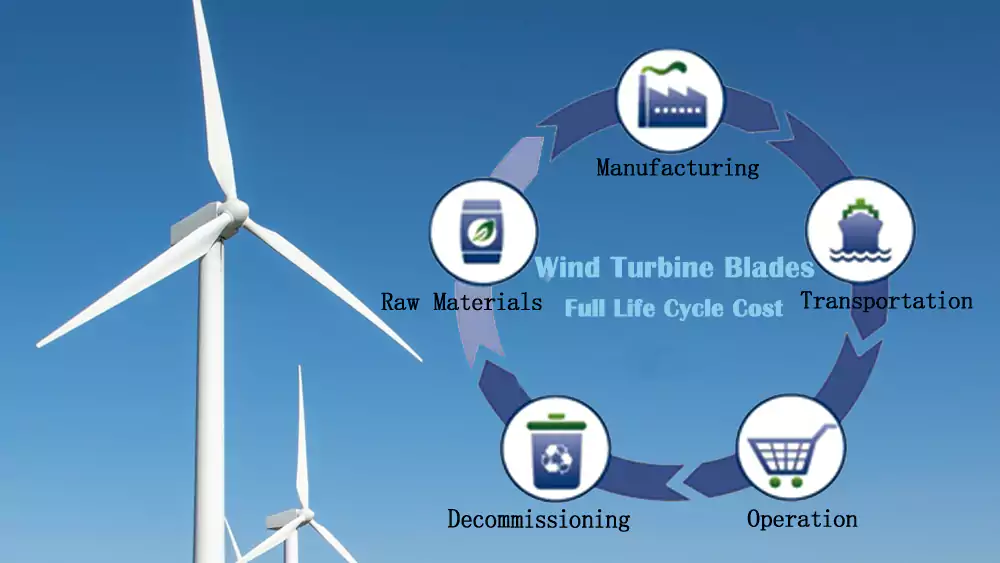
The true cost of a turbine blade includes manufacturing, lifespan, maintenance, and downtime, not just the purchase price, and these factors together determine total ownership cost.
If you only compare unit price, you miss the bigger picture. I have seen projects fail not because of design, but because of wrong cost assumptions. That is where most problems begin.
What Makes Up Total Cost?
From my experience, turbine blade cost is made of four main parts:
| Cost Element | Description | Impact Level |
|---|---|---|
| Manufacturing Cost | Casting + machining | Medium |
| Lifespan | How long the blade lasts | High |
| Maintenance | Inspection and replacement frequency | High |
| Downtime1 | Production loss during failure | Very High |
A cheap blade may save 20% upfront. But if it fails twice as fast, the real cost doubles. I have seen clients lose more from one shutdown than from the entire batch of parts.
In many industrial setups, downtime is the biggest cost driver. When a turbine stops, the whole system stops. That is why experienced engineers look beyond unit price.
How Material Selection Impacts Lifespan and Performance?
Material is not just a specification. It defines how the blade behaves in real working conditions. I always tell clients that performance is built into the material itself.
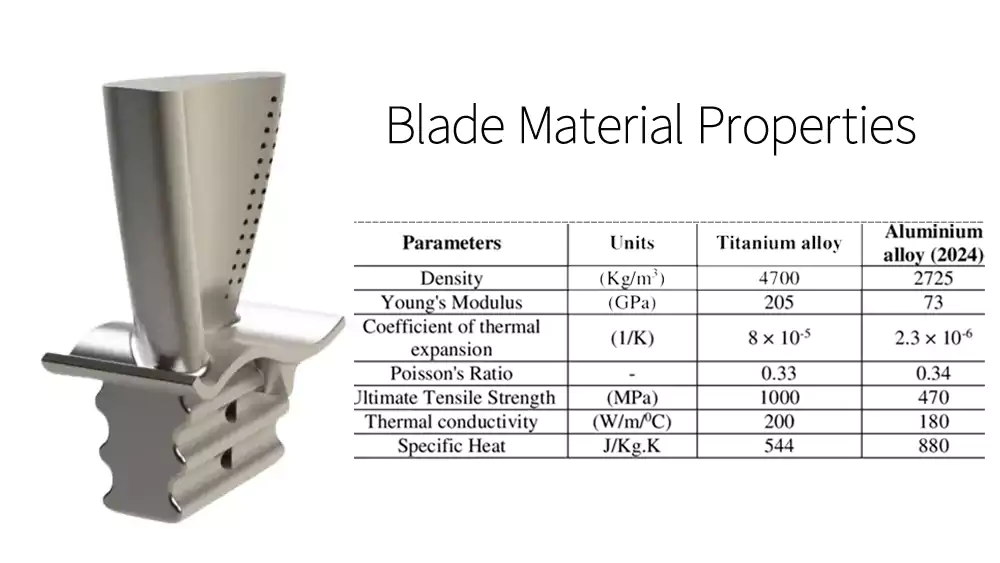
Material properties such as heat resistance, fatigue strength, and corrosion resistance determine how long a turbine blade lasts, which directly affects how often it must be replaced and the overall operating cost.
Many buyers understand materials at a basic level. But they often underestimate how quickly performance gaps turn into real cost differences. That is where deeper understanding matters.
Key Properties That Matter
1. High-Temperature Strength and Creep2
Turbine blades often run in high heat. If the material cannot handle this, it slowly deforms. This is creep. Once creep starts, failure is only a matter of time.
2. Oxidation and Corrosion Resistance3
In many environments, especially industrial and energy systems, oxidation is constant. Poor materials degrade fast. This leads to surface damage and internal weakness.
3. Fatigue Resistance
Blades face repeated stress. Heat cycles and mechanical loads create micro cracks. Over time, these cracks grow. Then failure happens suddenly.
4. Density and Weight
In automotive and motorcycle applications, weight matters. A lighter blade improves efficiency. But it must still meet strength requirements.
Real Impact on Cost
Each of these properties leads to one key outcome:
→ How often the blade needs to be replaced
If replacement frequency doubles, cost doubles. It is that simple.
If you want a deeper breakdown of common alloys used in these conditions, I recommend reviewing this guide on turbine blade materials.
Material Choices: Balancing Upfront Cost and Long-Term Value?
Many clients ask me the same question: which material is best? My answer is always the same. There is no best material. There is only the right one for the job.
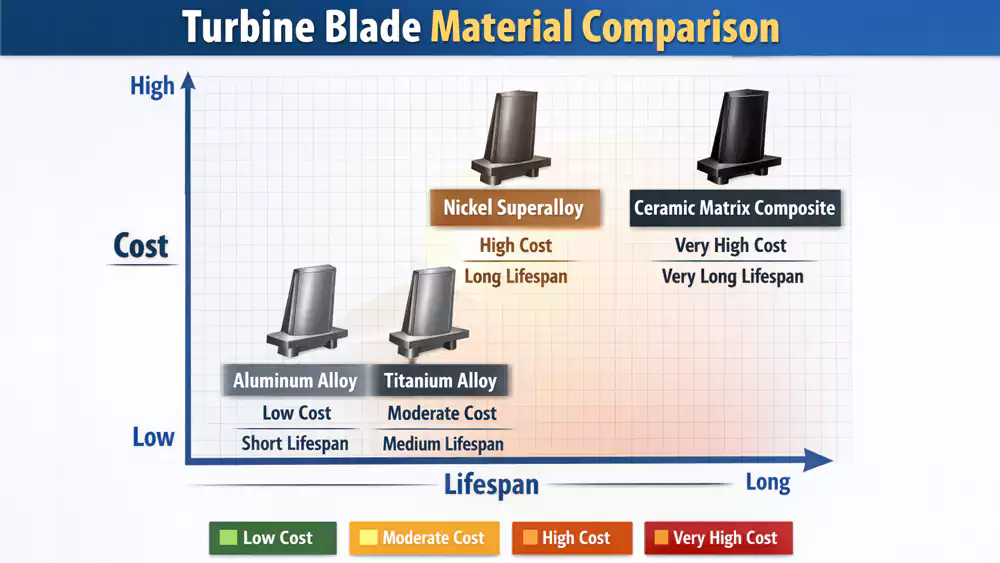
Different turbine blade materials offer varying balances between cost and lifespan, and selecting a higher-performance material often reduces total cost by extending service life and minimizing replacements.
At this point, the decision becomes practical. It is not about theory anymore. It is about choosing what works best under real conditions and budgets.
Common Material Options
| Material Type | Cost Level | Lifespan | Typical Use Case |
|---|---|---|---|
| Stainless Steel | Low | Short | Low-temperature applications |
| Nickel-Based Superalloy | High | Long | High-temperature turbines |
| Titanium Alloy | Medium | Medium | Lightweight applications |
For high-temperature environments, I often recommend looking into nickel-based superalloys for turbine blades, especially when long service life is critical.
Case Study: Custom Turbine Blade Project
I worked on a custom turbine blade for an industrial client in Europe. They first chose stainless steel to reduce cost. After testing, they faced early failure.
We redesigned the part using a nickel-based superalloy.
| Parameter | Stainless Steel | Nickel Superalloy |
|---|---|---|
| Operating Temp (°C) | 650 | 950 |
| Lifespan (hours) | 1,200 | 5,000 |
| Replacement Cycle | Every 3 months | Every 12 months |
| Unit Cost | $45 | $110 |
| Annual Total Cost | $720 | $220 |
Even though the material cost more than doubled, the annual cost dropped by over 60%.
This is something I see again and again. The cheaper option often becomes the expensive one later.
If you are comparing different manufacturing processes, it is also important to understand the differences between investment casting and CNC machining for turbine blades.
Choosing the Right Material: A Strategic Approach to Reducing TCO?
Choosing material should not be guesswork. It should follow a clear process. I always guide clients through a few key questions.
The right turbine blade material is selected by matching operating temperature, load conditions, and lifespan requirements to achieve the lowest total cost of ownership over time.
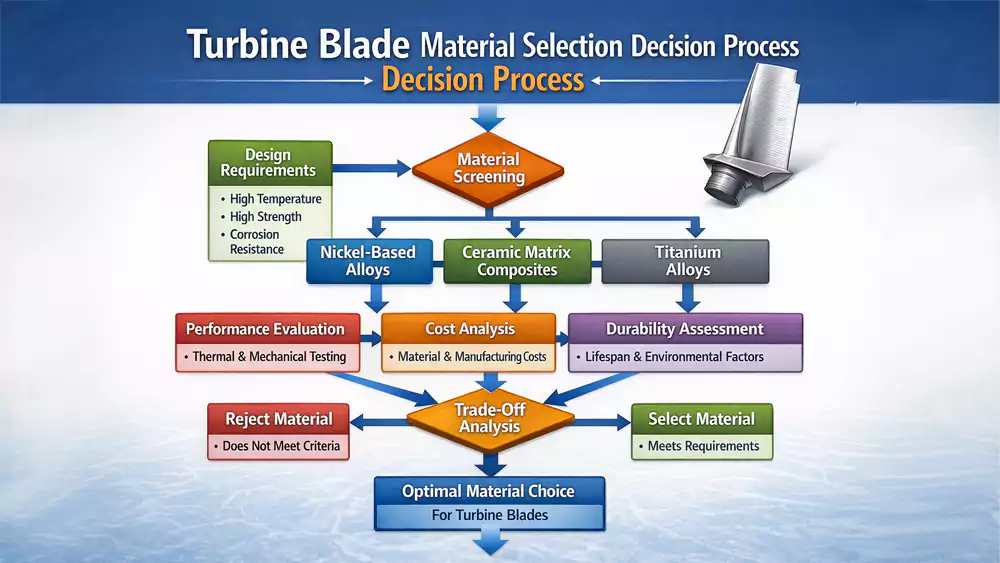
At this stage, many projects either succeed or fail. A structured approach makes all the difference. Without it, decisions rely too much on assumptions.
Key Factors to Consider
1. Operating Temperature4
This is the first filter. Many materials fail simply because they are used beyond their limits.
2. Load and Stress Conditions
Is the blade under constant load or cyclic stress? This affects fatigue requirements.
3. Required Lifespan
Some applications need long-term stability. Others allow shorter cycles.
4. Cost Targets
Budget matters. But it should be balanced with performance.
Why Manufacturing Still Matters
Even with the right material, poor manufacturing can ruin everything.
From my 20+ years in investment casting, I know this well:
- Casting quality affects internal structure
- Porosity reduces strength
- Machining accuracy affects stress distribution
A high-quality process like investment casting for turbine blades ensures better consistency and fewer defects.
At the same time, precision finishing also matters. Tight tolerances directly impact performance, which is why understanding CNC machining tolerances for turbine blades is critical.
If you are planning a project, you can explore our full custom turbine blade manufacturing capabilities to see how material and process work together.
Final Insight
The material you choose today determines how often you replace the blade tomorrow. Most buyers do not see this until the first failure happens.
Working with an experienced casting and machining partner ensures the material performs as intended—and delivers the lowest total cost over time.
Conclusion
Material selection is a cost decision. The right choice reduces failure, downtime, and long-term expenses while improving reliability.
-
Explore this link to understand why downtime is the most critical cost driver and how it affects overall production and profitability. ↩
-
Explore this to understand how materials withstand extreme heat and prevent deformation, crucial for turbine blade durability. ↩
-
Learn why resistance to oxidation and corrosion is vital for maintaining blade integrity and extending service life. ↩
-
Explore this link to understand how operating temperature limits impact material durability and prevent failure. ↩